
Strategic Spatial Energy Planning (SSEP)
Strategic Spatial Energy Planning will help speed up the journey for Great Britain to switch to clean, affordable and reliable energy. It will do this by giving businesses, investors, people, and government a clearer picture of what our future energy system will look like.
The SSEP will provide a pathway for electricity and hydrogen generation and storage types, locations, capacities, and timings. This will be optimised for cost across demand and high-level network needs, as well as environmental, societal, and other spatial interests, to support the energy transition efficiently and securely.
The plan will take into account what the public thinks, environmental concerns, and how different industries use land and sea. Future plans could also include other types of energy.
The first SSEP will be a GB-wide plan, mapping potential zonal locations, quantities and types of electricity and hydrogen generation and storage. This will help accelerate and optimise the transition to clean, affordable and secure energy across GB. In taking a zonal approach to locations, the SSEP will not identify or recommend specific projects to be delivered. The SSEP works with and supports other important energy transition programmes, like the Centralised Strategic Network Plan (CSNP) and Regional Energy Strategic Plans (RESP).
You can find more information on the SSEP in the commission we received from UK, Scottish and Welsh governments. This is available on the Department for Energy Security and Net Zero’s website.
Explainer animations
Strategic Energy Planning explained

Learn how our strategic energy plans will make sure future GB energy needs are met.
Strategic Spatial Energy Plan (SSEP) explained
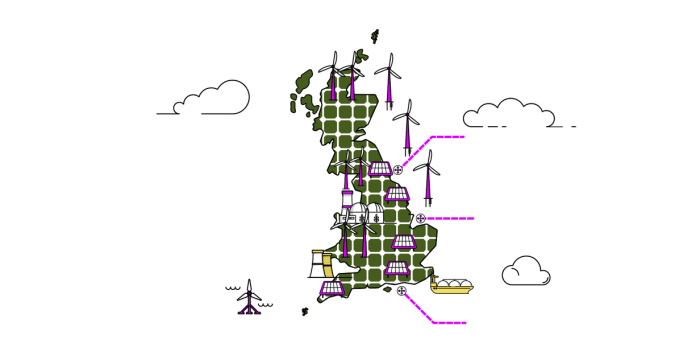
Find out about GB's first SSEP, which will give a clearer picture of what our future energy system will look like.

SSEP Pathway Options Report submission
On 28 August we submitted our Pathway Options Report to UK, Scottish and Welsh governments, who are co-commissioners of the Strategic Spatial Energy Plan. The six pathways in our report represent our independent view of potential energy system futures, setting out what energy infrastructure Great Britain could need, where it could go and when it might be needed.

Submission letters
The UK Energy Secretary will now consider the pathway options and select the Government’s preferred pathway, with Scottish and Welsh governments playing a formal advisory role. We will provide information on the pathway options in our future publications.

SSEP transparency update
We are working with a broad range of stakeholders, including industry experts and government, to develop Great Britain’s first Strategic Spatial Energy Plan (SSEP).
To make our work as transparent as possible, we will share more on the data and information being used to develop the plan.
Our August 2026 transparency update is now available to view.

SSEP Technical Webinar – 30 January
Interested in Strategic Spatial Energy Plan (SSEP) developments? Learn about our latest modelling outputs and pathway appraisal work in this technical webinar for industry experts and stakeholders.
SSEP update: SEA Scoping Report complete
We are working on a Strategic Environmental Assessment (SEA) for the SSEP. This looks at likely significant environmental effects of the plan.
Our first step, SEA scoping, is now complete. This work confirms what environmental issues we will consider and explains how we will progress the SEA.
We consulted statutory consultees and other relevant organisations over seven weeks and received valuable feedback.
SEA Scoping Report and Consultation Feedback Response
Our Consultation Feedback Response document outlines:
- Key consultation themes
- Our response to each theme
- How we will amend the SEA process, where appropriate.
The publication of the SEA Scoping Report and Consultation Feedback Response marks the end of our scoping phase and allows the public to see the process followed. The next stage of this work, the SEA Environmental Report, will go out to public consultation with the draft SSEP. As communicated in December 2025, this will be in early 2027.

SSEP final methodology published
We have published our final methodology for Britain’s first Strategic Spatial Energy Plan (SSEP), following approval from the UK Secretary of State for Energy Security and Net Zero and Ofgem.
The SSEP will be the first overall plan for Great Britain’s energy production and storage from 2030 to 2050. It will give clarity to businesses, investors, and consumers on what the future energy system will look like.
News story
Read our news story outlining the final methodology publication.
Methodology Updates Addendum
Since publication of the SSEP methodology in May 2025, the SSEP programme has adapted the processes described.
Methodology appendices
View appendices and see how feedback shaped the final methodology.
Strategic energy planning summary
Read our introduction to strategic energy planning.
Government methodology approval letter
View the Department of Energy Security and Net Zero’s methodology approval letter.
Ofgem methodology approval letter
View Ofgem’s approval letter for the SSEP methodology.

SSEP technical webinar
What energy will GB need in future, and where? Read our webinar slides to learn more about how we're using maps and computer models to identify the best places to build energy infrastructure.

How can I get involved?
Share your thoughts and feedback on our approach, as well as your priorities in the initial version of the methodology, by emailing [email protected].