
Scottish boundaries
The onshore transmission network in Scotland is owned by SSEN Transmission and SP Transmission.
The Scottish NETS is divided into seven boundaries:
- B0 – Upper North SSEN Transmission
- B1a – North West SSEN Transmission
- B2 – North to South SSEN Transmission
- B3b – Kintyre and Argyll SSEN Transmission
- B4 – SSEN Transmission to SP Transmission boundary (shared by SSEN Transmission and SP Transmission)
- B5 – North to South SP Transmission
- B6 – SP Transmission to NGET (shared by SP Transmission and National Grid Electricity Transmission)
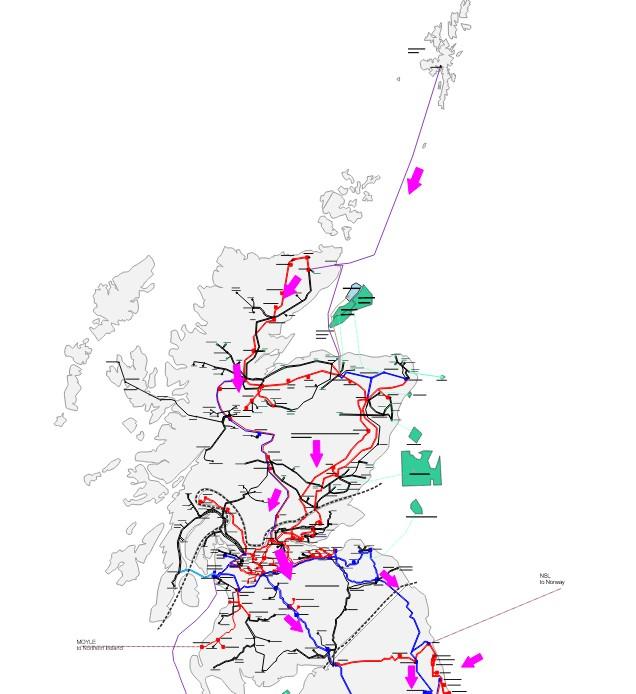
The map below shows the general pattern of power flow directions expected to occur most of the time in the years to come up to 2036, i.e. power will generally flow from north to south. The arrows in the diagram illustrate power flow directions and are approximately scaled relative to the winter peak flows.
Regional drivers
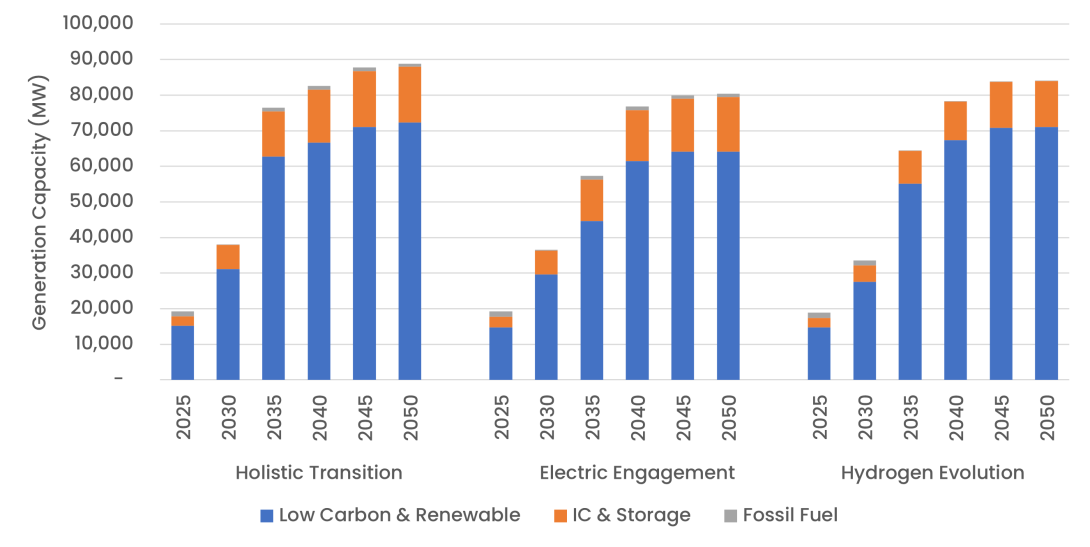
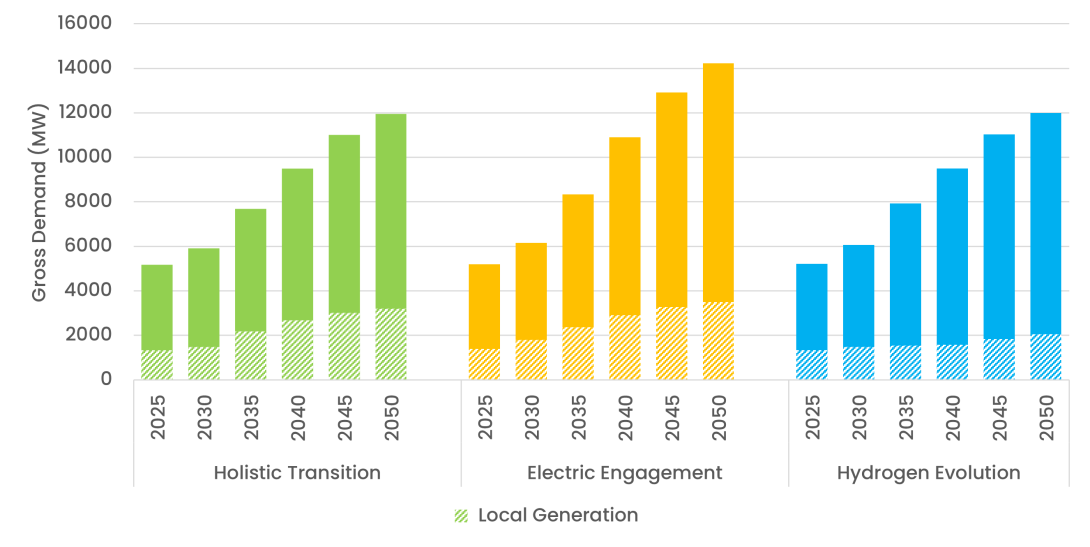
Offshore wind is the main driver of rapid growth in renewable generation across Scotland, significantly increasing north–south transfer requirements and network reinforcement needed over the next decade. Scotland is expected to remain a net exporter due to high generation capacity relative to gross demand (38 GW vs ~6 GW by 2030 under Holistic Transition), as seen in Figures below.
Increasing boundary flows (B0–B6), reduced synchronous generation capacity, and the prevalence of long transmission lines across Scotland increase instability and high-voltage risks, particularly in Central Scotland under light load conditions. In the past year, NESO has sought inertia and short-circuit level services, through the Long Term 2029 Tender , to address future network stability concerns within Scotland and across GB.
We are developing the Scottish Constraint Management Intertrip Service (CMIS), a non-build solution that contracts with generators to provide post-fault intertrip facilities which can manage constraints more cost-effectively than the balancing mechanism, with delivery from Q4 2027.
Following the Constraints Collaboration Project, we are seeking to incentivise flexible demand located near network constraints via the Demand for Constraints service—to reduce curtailment and constraint costs.
Generation Capacity
Gross Demand
Boundary regions
Click on the regions below to expand the boundary and understand its capability and challenges.
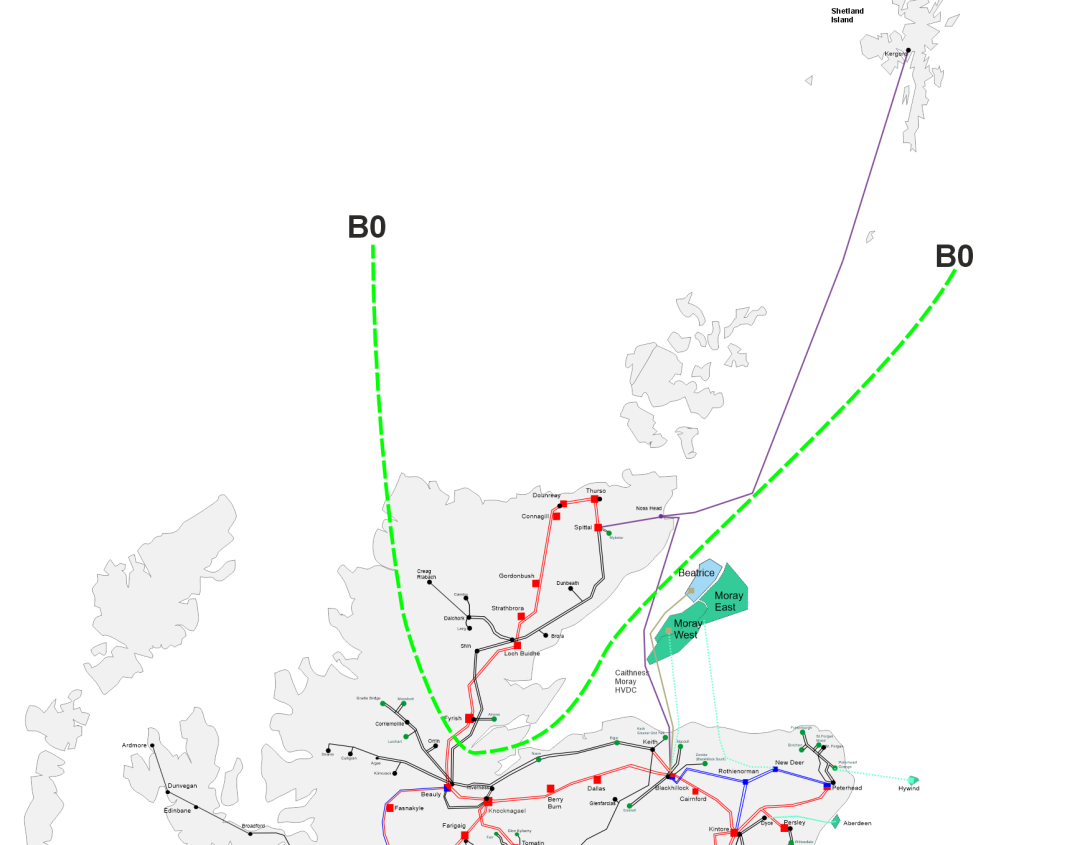
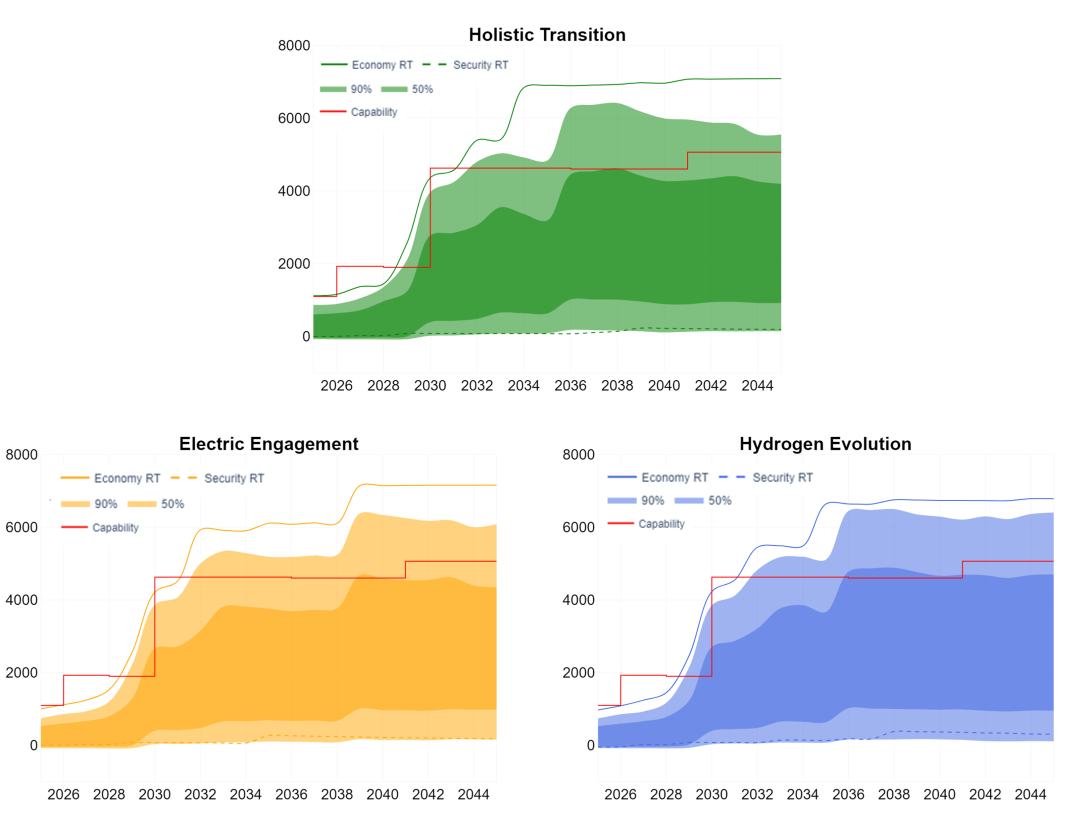
As with previous years ETYS projections, future power transfer over this boundary will gradually increase due to growth of renewable generation north of the boundary, mainly onshore and offshore wind in the Orkney and Pentland Firth waters.
SSEN Transmission projects will develop and reinforce the network in the north of Scotland which will increase the capacity of transferring power from north to south of the GB system.
Beyond 2035, we see a decrease in expected transfers in the Holistic Transition and Hydrogen Evolution pathways. This is due to increasing demand in the north of Scotland whilst generation capacity remains relatively flat post-2035.
Boundary flows and base capability
View an interactive version of the graph
B0 boundary capability is limited to 1.1 GW by a thermal constraint on the Shin – Beauly 132kV circuit
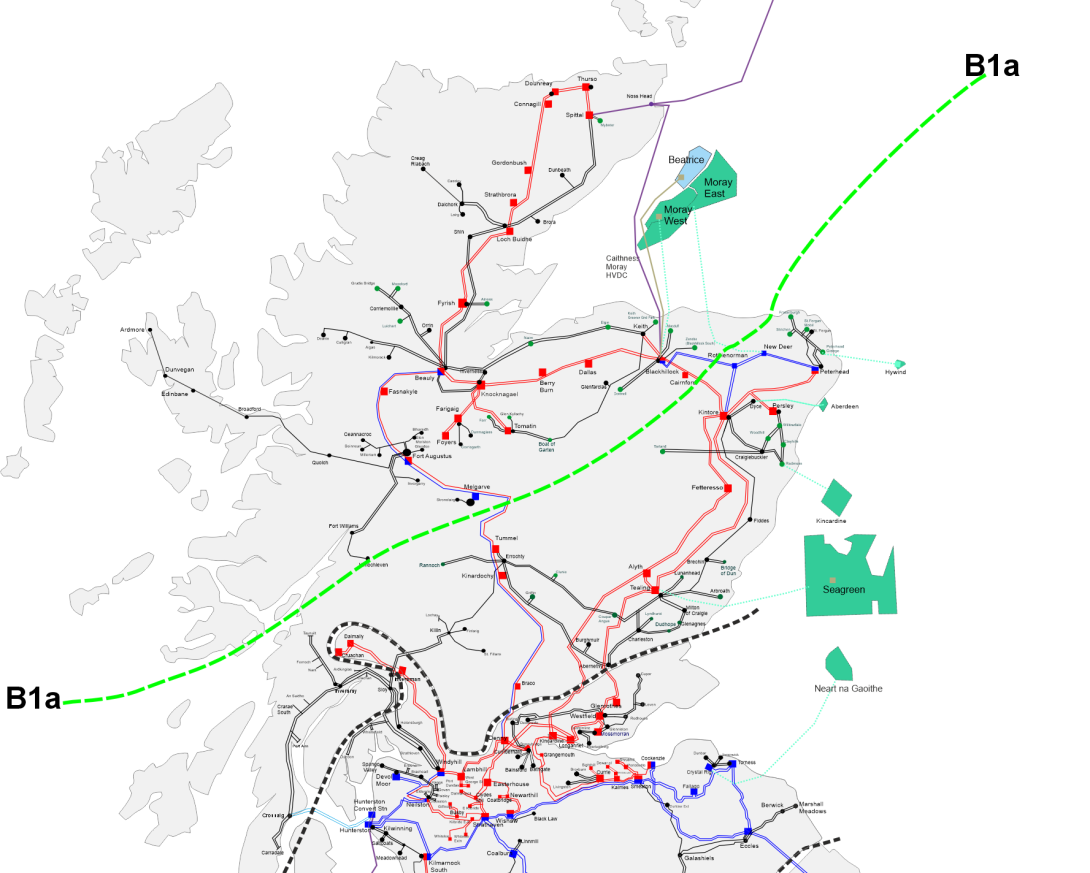
New renewable generation connections north of the boundary are expected to result in a significant increase in export requirements across the boundary, especially along the Beauly – Denny and East coast circuits.
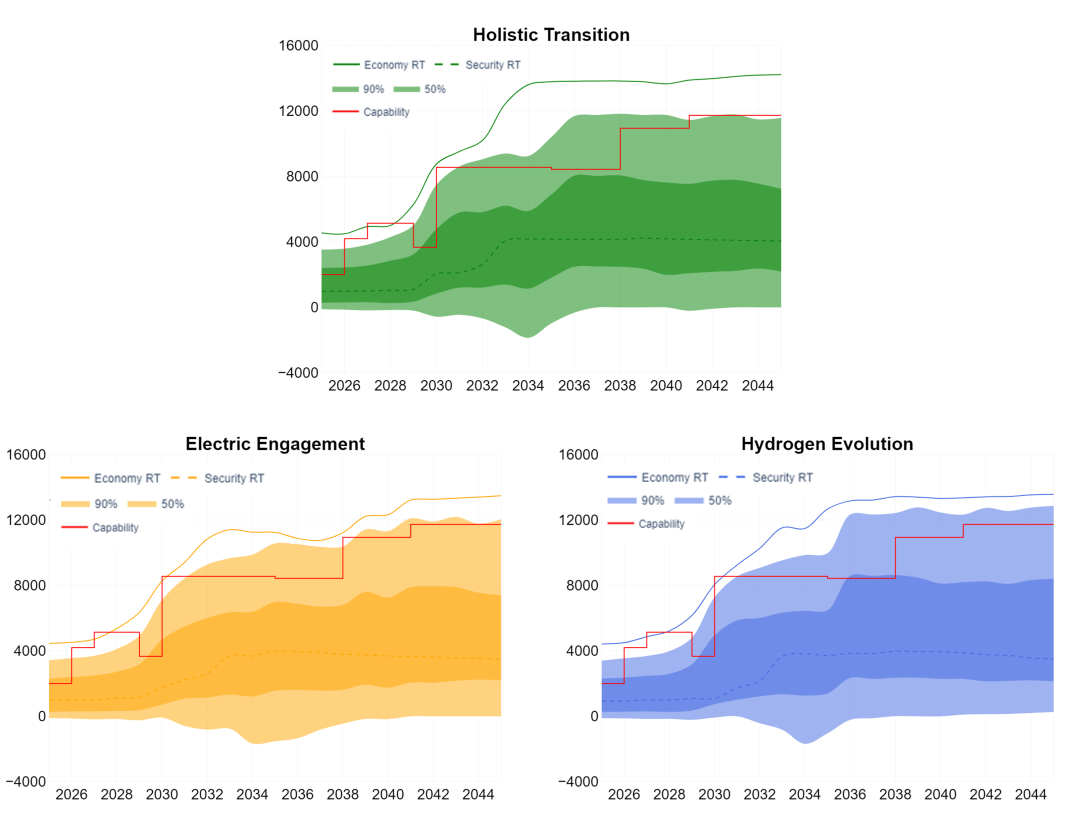
In all FES pathways, there is an increase in the power transfer through B1a due to the large volume of renewable generation connecting north of this boundary. Contracted generation behind boundary B1a includes the renewable generation on the Western Isles, Orkney and the Shetland Isles with a considerable volume of large and small wind developments both onshore and offshore. Future connection of new pumped storage assets in the North-West of the country are planned
Beyond 2035, we see a decrease in expected transfers in the Holistic Transition and Hydrogen Evolution pathways. This is due to increasing demand in the north of Scotland whilst generation capacity remains relatively flat post-2035.
Boundary flows and base capability
View an interactive version of the graph
The boundary capability is limited to 2 GW due to thermal constraint on the Kintore - Tealing 275kV circuit.
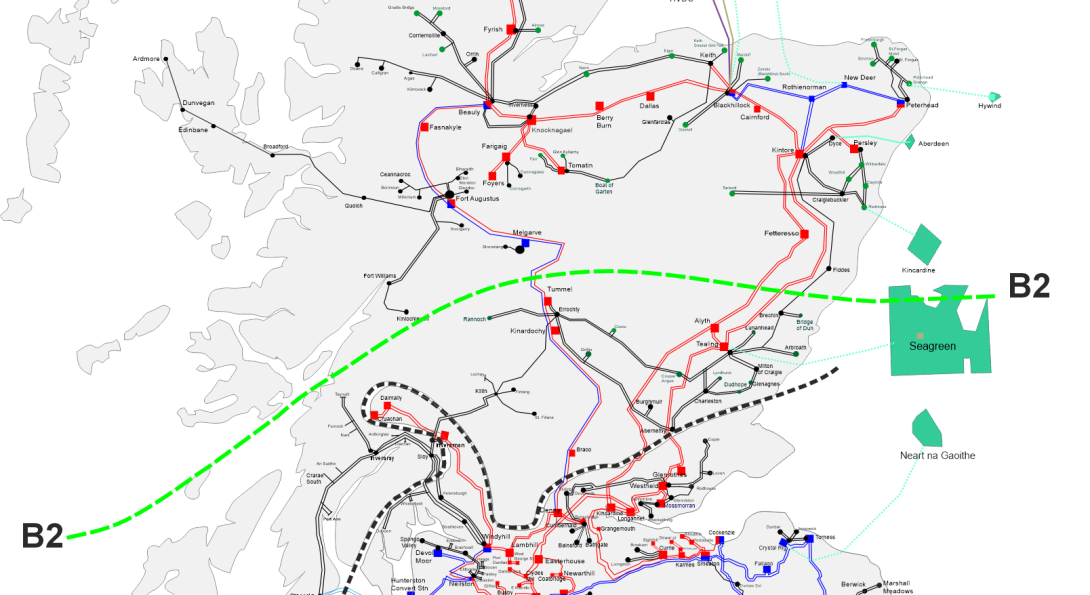
The generation behind boundary B2 includes both onshore and offshore wind, with the potential for additional pumped storage. Thermal generation lies between boundaries B1a and B2, as do several offshore windfarms.
The potential future boundary transfers for boundary B2 are increasing at a significant rate because of the high volume of renewable generation to be connected to the north of the boundary. This increased generation capacity will drive increasing power flows down the east coast 275kV circuits.
The increase in the required transfer capability for this boundary across all the FES, with expected flows being above capability, indicates the strong potential need to reinforce the transmission system.
Boundary flows and base capability
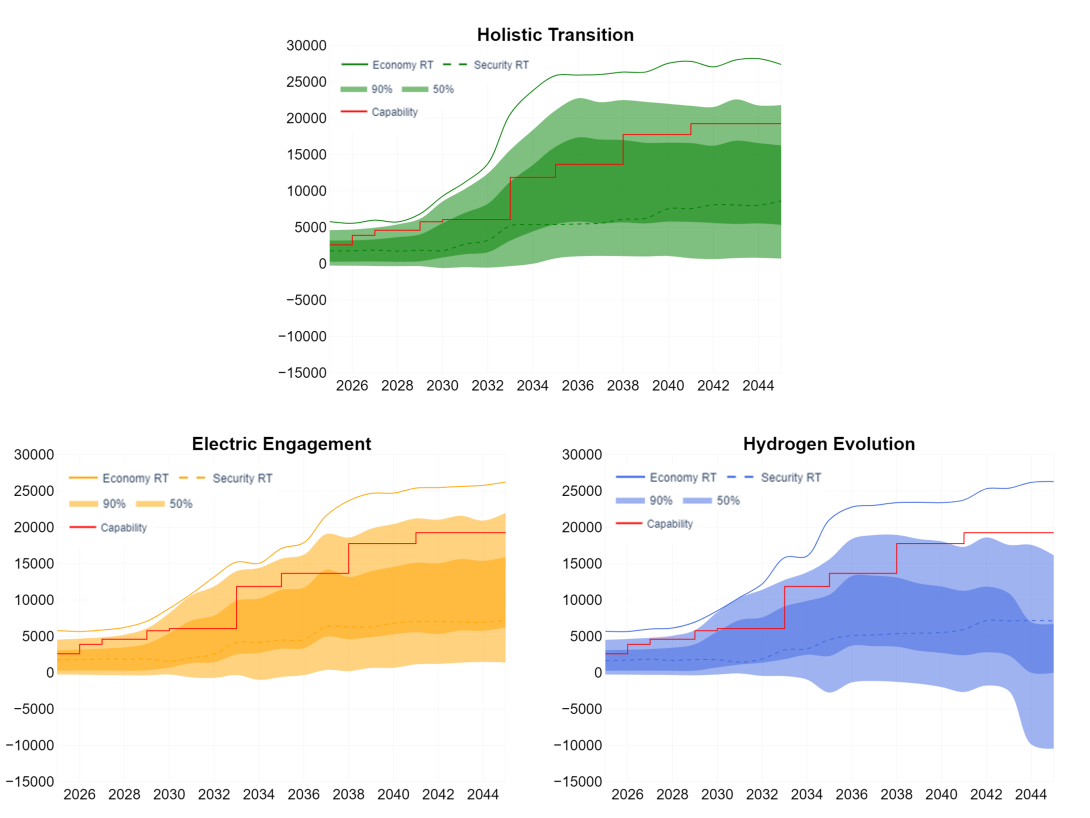
View an interactive version of the graph
The boundary capability is limited to 2.8 GW due to thermal constraint on the Killin - Errochty 132kV circuit.
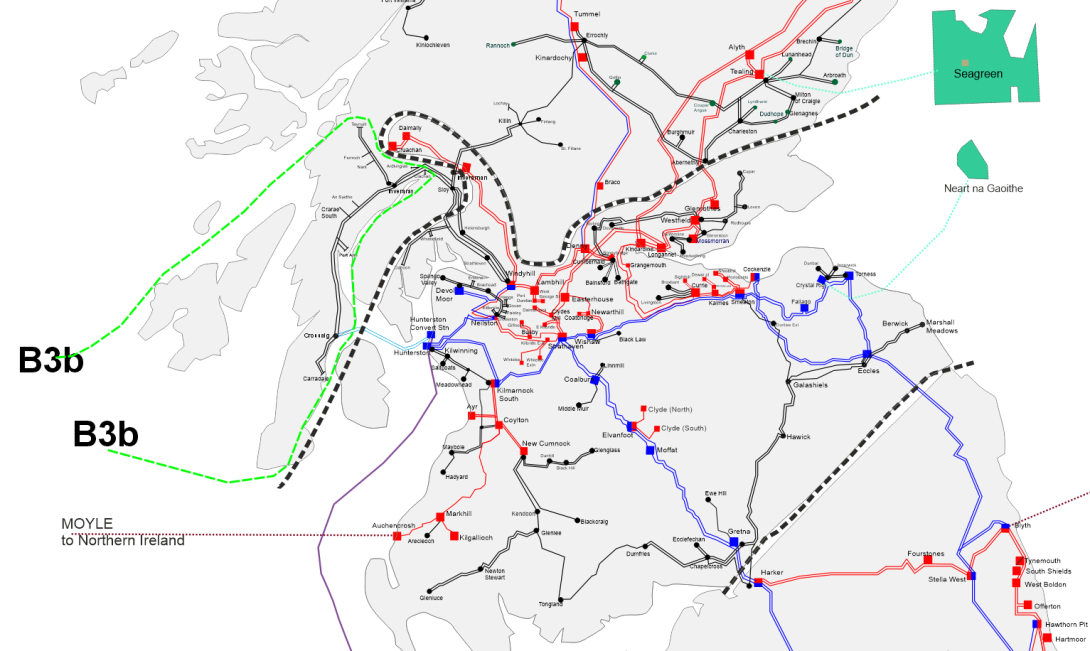
The B3b boundary was not studied for the Beyond 2030 – Electricity Transmission Update and subsequently the 50% and 90% flows data has not been calculated for the FES25 backgrounds, the boundary chart data still uses FES24 backgrounds for the 50% and 90% data.
Boundary flows and base capability
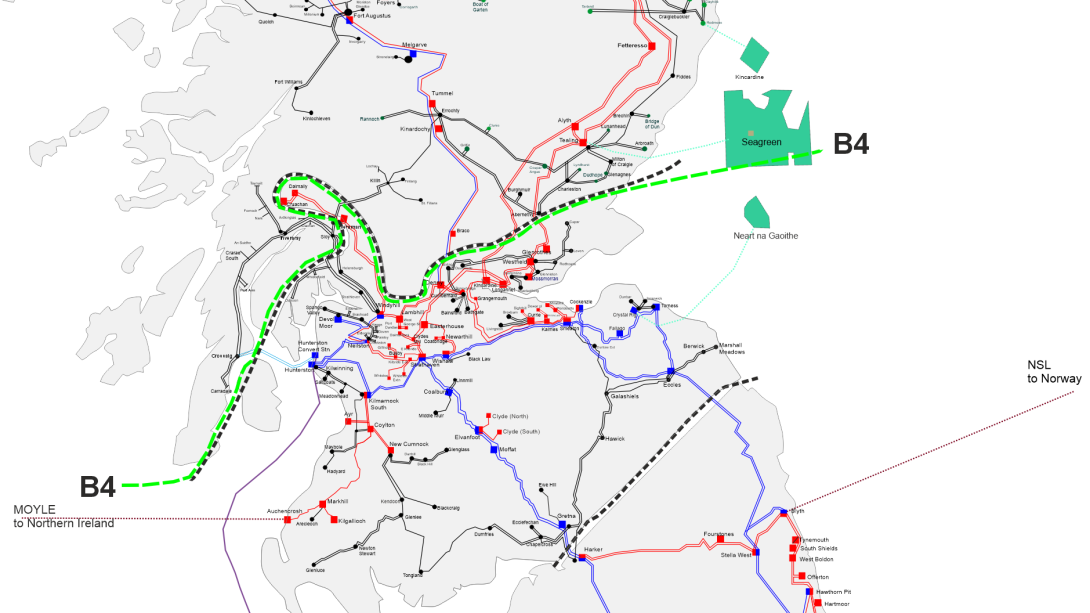
With increasing generation, the SSEN Transmission area for all scenarios, the required transfer across boundary B4 is expected to increase significantly over the next decade.
Across all FES pathways, power transfer through B4 boundary increases due to significant generation connecting north of the boundary, including all generation above boundaries B0, B1a, B2, and B3b. This is primarily onshore and offshore wind generation, with the prospect of significant further offshore wind and storage being connected in the longer term.
Boundary B4 has a range of planned reinforcements as recommended by Beyond 2030 which will increase boundary capability; significant constraint costs may be incurred due to ongoing asset outages as some of these works take place.
Boundary flows and base capability
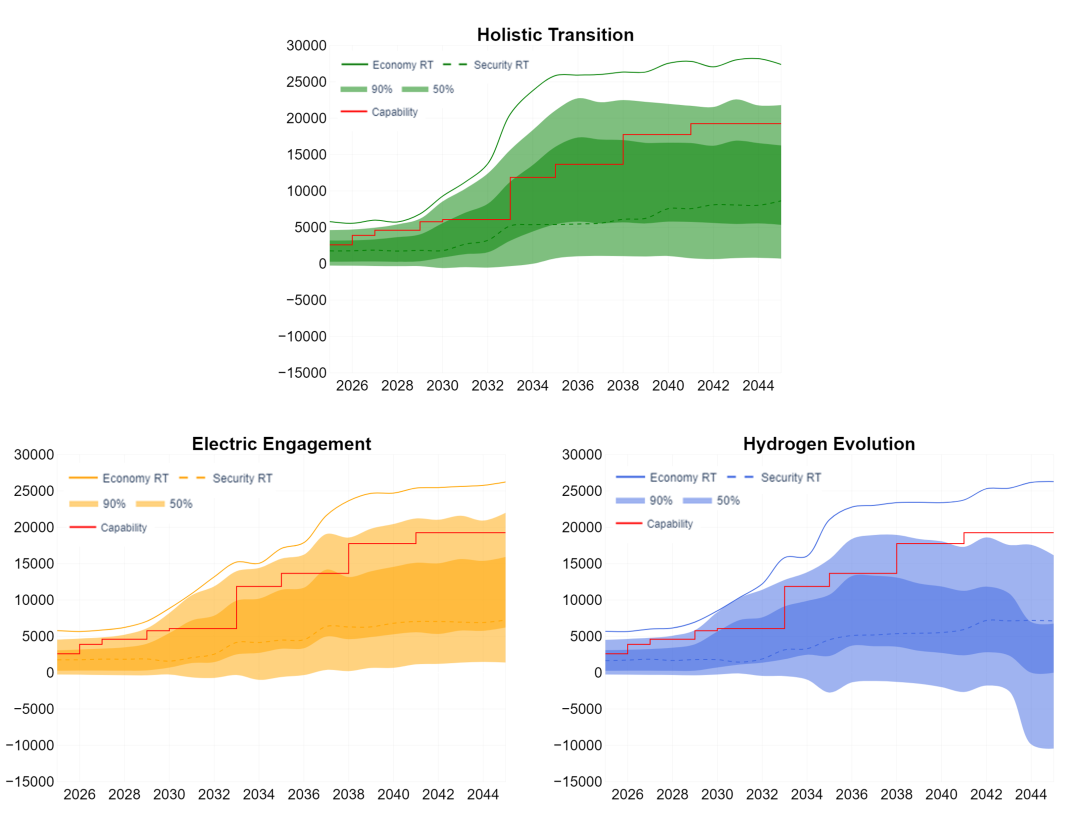
View an interactive version of the graph
The boundary capability is limited to 4 GW due to thermal constraint on the Tealing - Westfield 275kV circuit
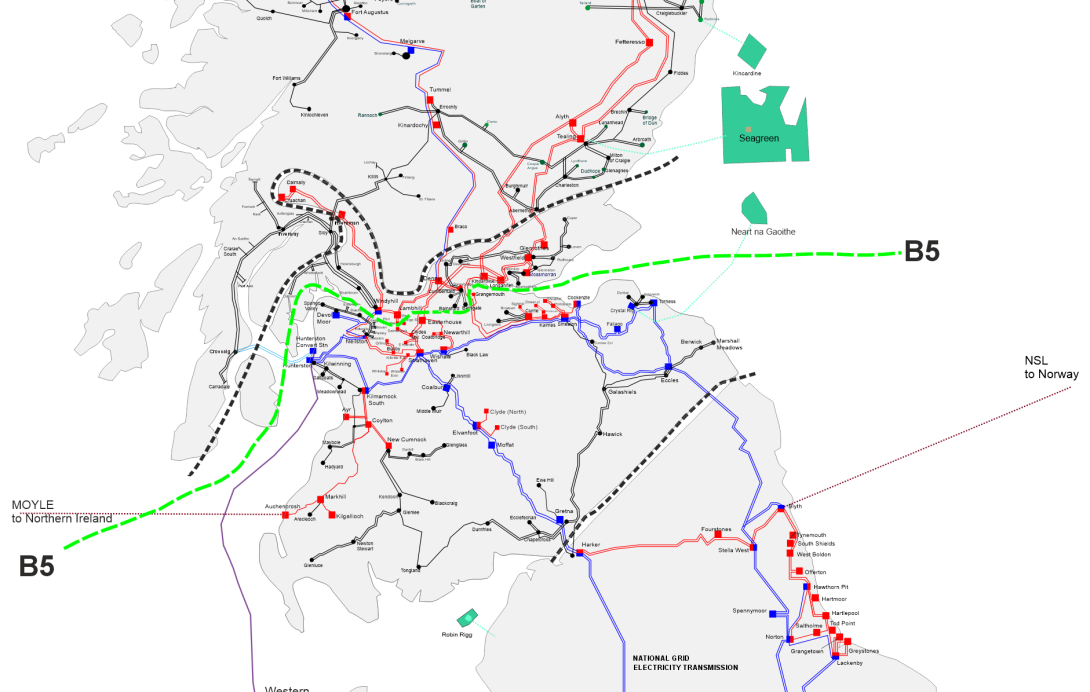
Across all FES pathways, the power transfer through boundary B5 increases because of the significant volumes of generation connecting north of the boundary, including all generation above boundaries B0, B1a, B2 and B4. This is primarily onshore and offshore wind generation.
B5 has a range of reinforcements recommended by Beyond 2030 which will enhance its capability.
Boundary flows and base capability
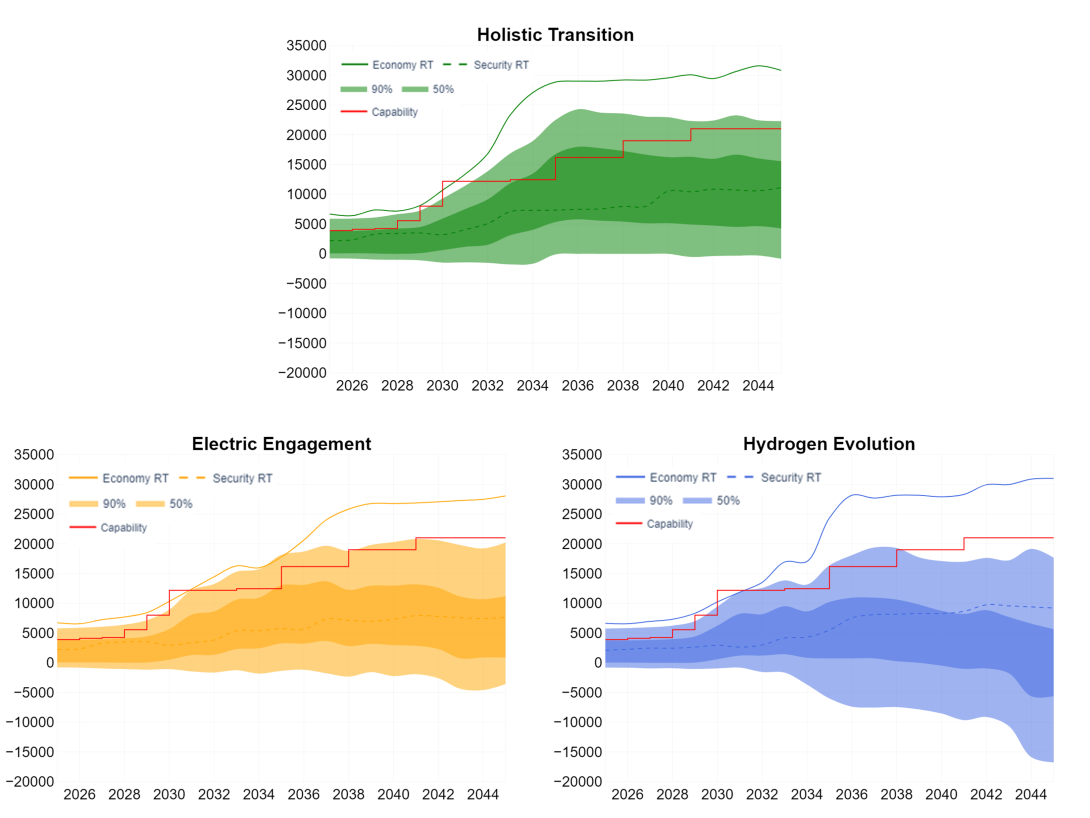
View an interactive version of the graph
The boundary capability is limited to 3.9 GW due to thermal constraint on the Denny North-Lambhill 275kV circuit
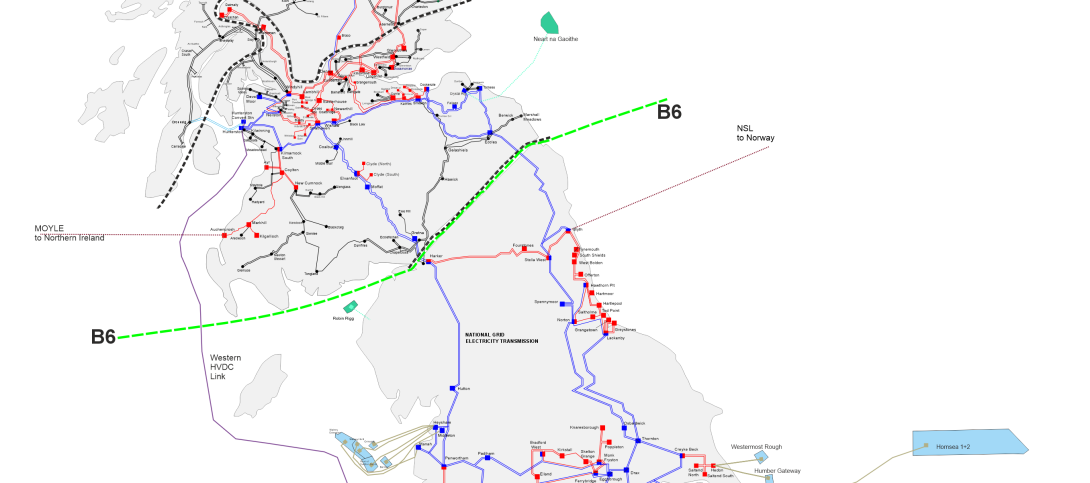
Across all FES pathways there is an increase in the power transfer requirements from Scotland to England due to the connection of additional generation in Scotland, primarily onshore and offshore wind.
With the FES including many wind farms in Scotland, the range of boundary power flows is very wide due to the variable nature of wind generation. During periods of low generation output in Scotland, it is credible to have power flowing from south to north feeding Scottish demand.
The magnitude of the south to north power flows is low compared to those in the opposite direction so network capability is sufficient to support those conditions. While the south to north transfer capability is enough to meet demand in Scotland, it is still necessary for synchronous plant capability to remain in service in Scotland to maintain year-round secure system operation.
Boundary flows and base capability
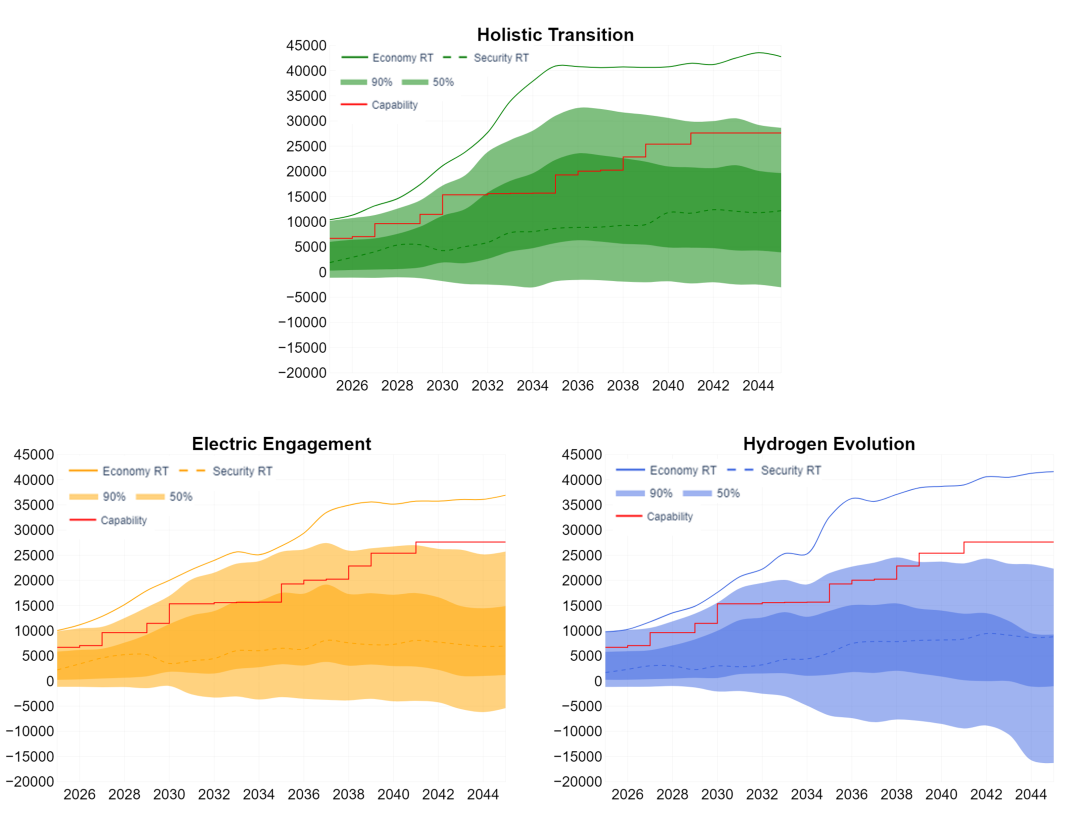
View an interactive version of the graph
The boundary capability is limited to 6.7 GW due to thermal constraint on the Harker-Moffat 400kV circuit.