East of England boundaries
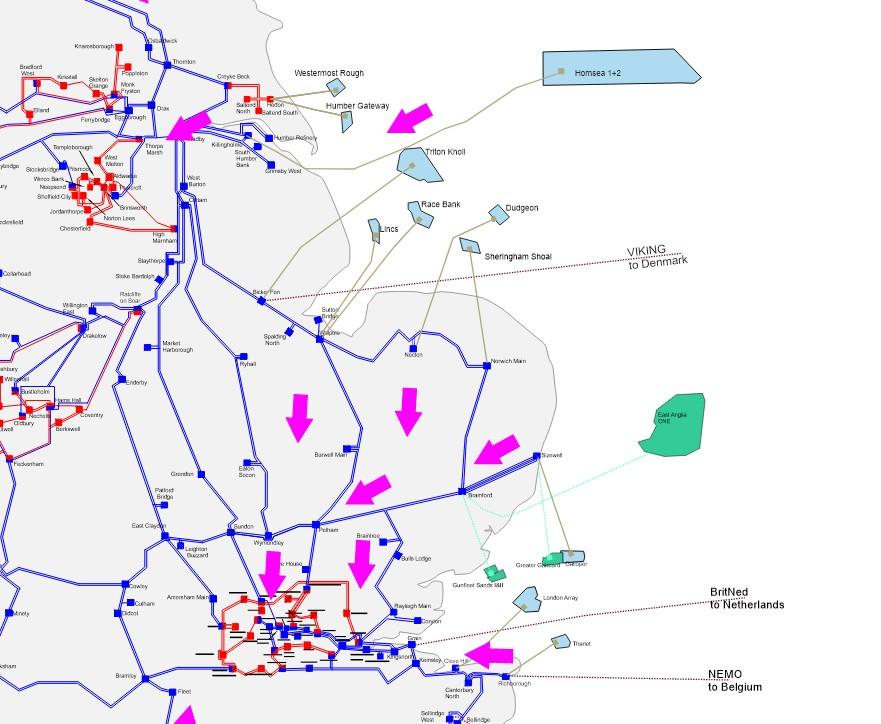
The East of England region includes the counties of Norfolk and Suffolk, with EC5 being the only boundary within this region.
The map below shows the general pattern of power flow directions expected to occur most of the time in the years to come up to 2036. Power will generally flow from north to south down through Lincolnshire and east to west out of East Anglia. The arrows in the diagram illustrate power flow directions and are approximately scaled relative to the winter peak flows.
Regional Drivers
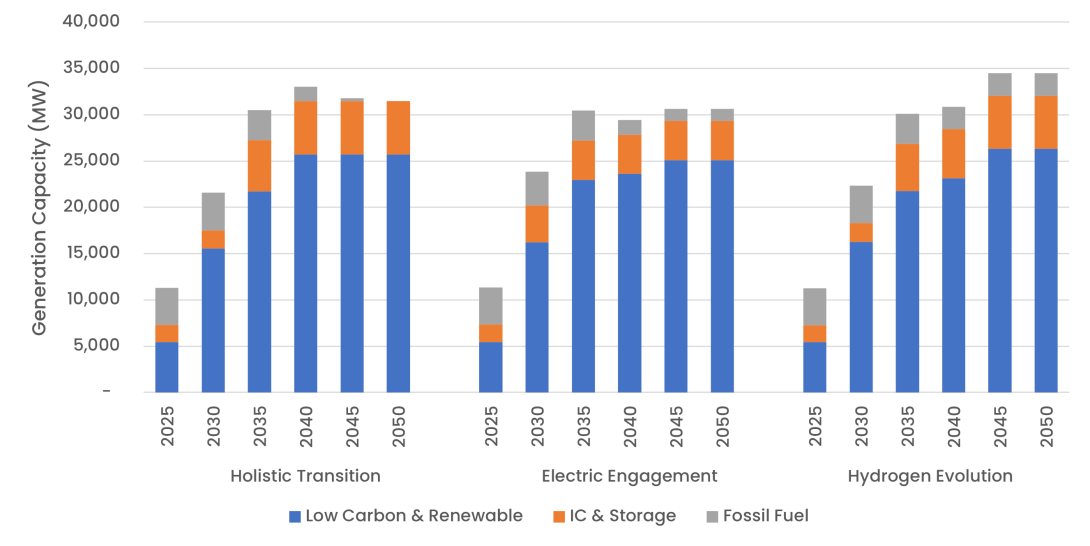
Over the next decade, this region could see growth in renewable and low carbon generation, primarily from offshore wind which will slow by 2040. From 2030, further interconnector and storage connections are expected in this region which will help to mitigate local constraints under high-wind conditions.
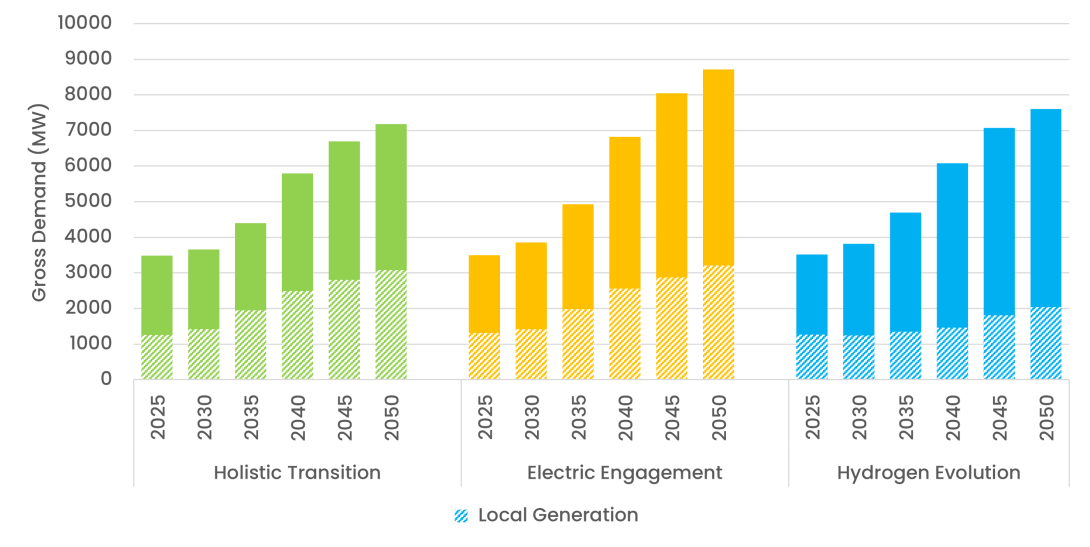
Demand is steady in the short term with growth expected from 2030 out to 2050. Already a net-export region, the growth in generation capacity far exceeds the growth in demand meaning that this region will become a significant exporter during high-wind periods.
There is work ongoing to coordinate the network infrastructure in this region to facilitate greater coordination of offshore generation and interconnectors connecting into this region. This follows the 2024 publication of our East Anglia Network Study which reviewed the upcoming generation connections and network reinforcement planned in the area.
The EC5 Constraint Management Intertrip Service is now in place and contracting with generators in the region to provide a more economical method of managing constraints than actions through the Balancing Mechanism
Generation Capacity
Gross Demand
Boundary regions
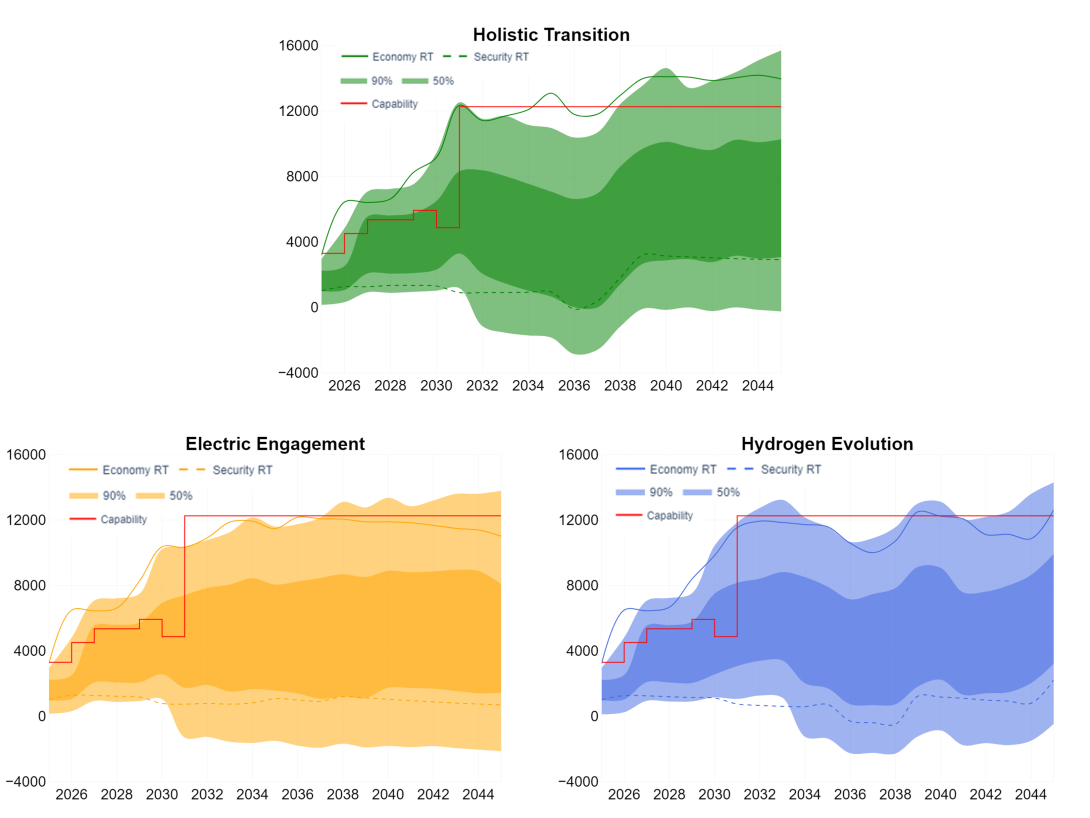
Click on the regions below to expand the boundary and understand its capability and challenges.
If you would like to learn how to interpret the graphs, click the button below.
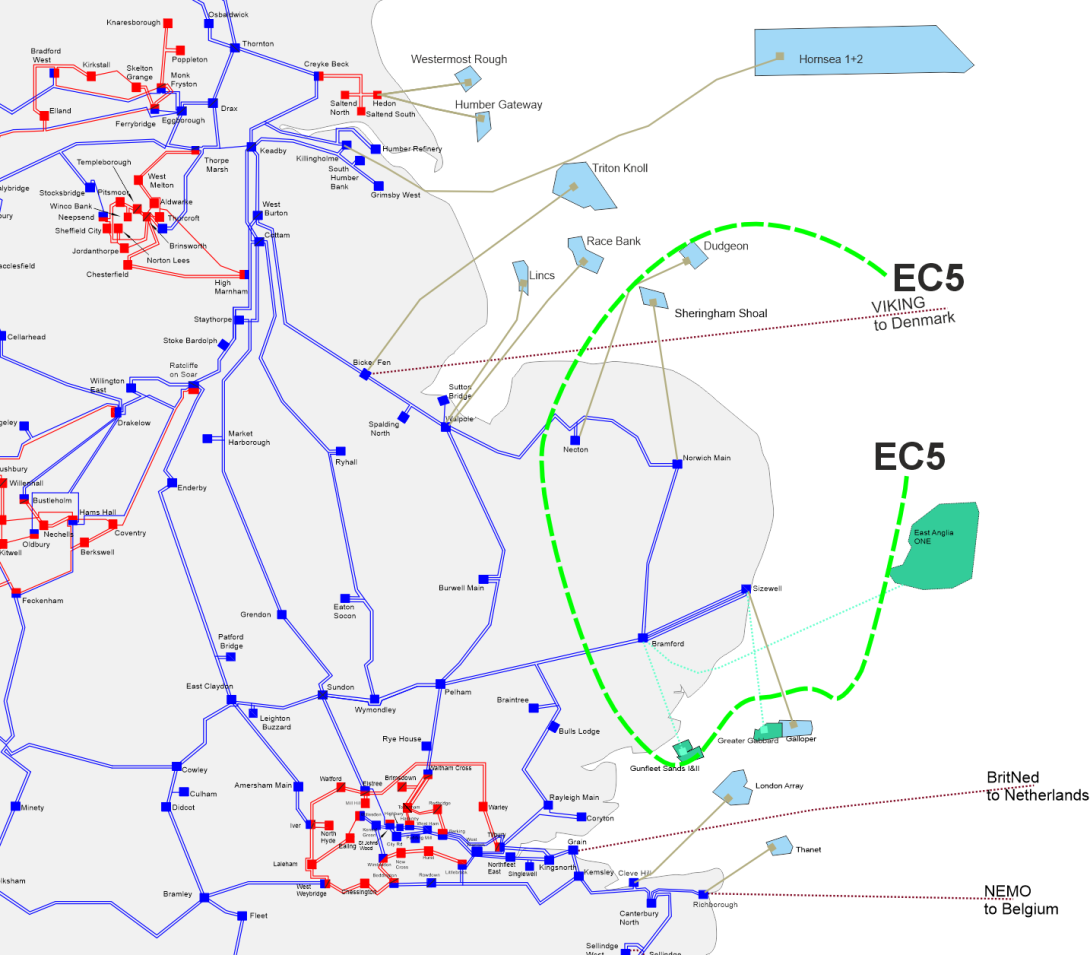
There are several offshore wind projects connecting into the region.
The growth in low carbon and renewable generation connecting behind this boundary greatly increase the power transfer requirements. The present boundary capability is sufficient for today’s needs but could be significantly short of the future capability requirements pre 2030.
Work is ongoing to coordinate the network infrastructure in this region to facilitate greater coordination of generation connecting into this region.
Boundary flows and base capability
The boundary capability is limited to 2.3 GW due to a voltage constraint for a fault on the Pelham-Bramford-Braintree 400kV circuits.