
North of England boundaries
The North of England transmission region includes the network between the Scottish border and the North Midlands.
Boundaries B7a and B8 are in this region.
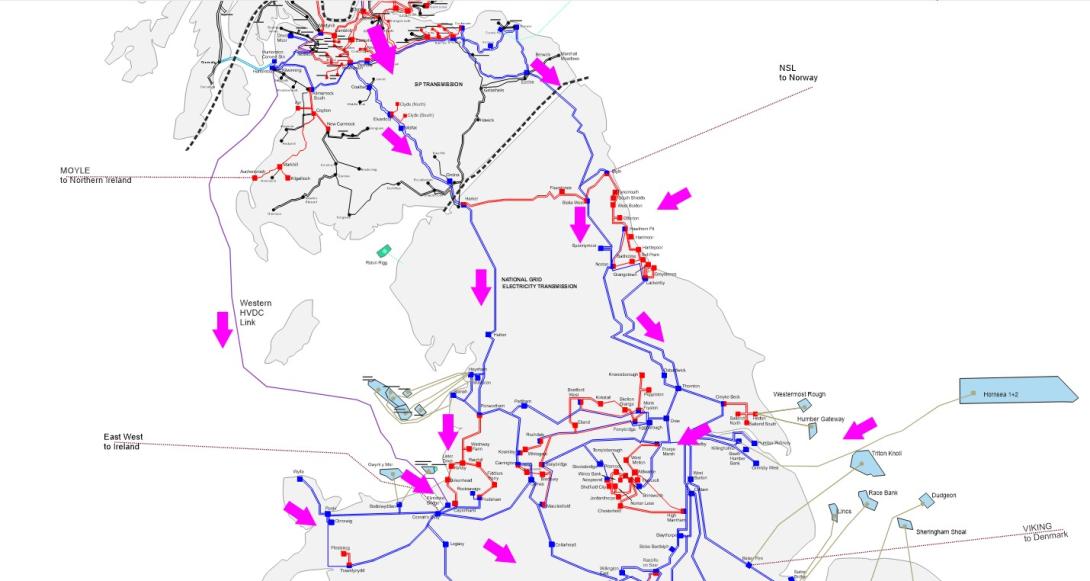
The map below shows he general pattern of power flow directions expected to occur most of the time in the years to come up to 2036. Power will generally flow from north to south. The arrows in the diagram illustrate power flow directions and are approximately scaled relative to the winter peak flows..
Regional drivers
The North of England is a major exporting region, where generation significantly exceeds demand. Alongside power inflows from Scotland this can result in strong north–south power flows, particularly during high wind conditions.
High output across the North of England and Scotland can lead to network congestion, with outages on north to south routes increasing constraint risks. New network reinforcements are planned to create new transmission routes and to upgrade existing network in order to support these future power flows.
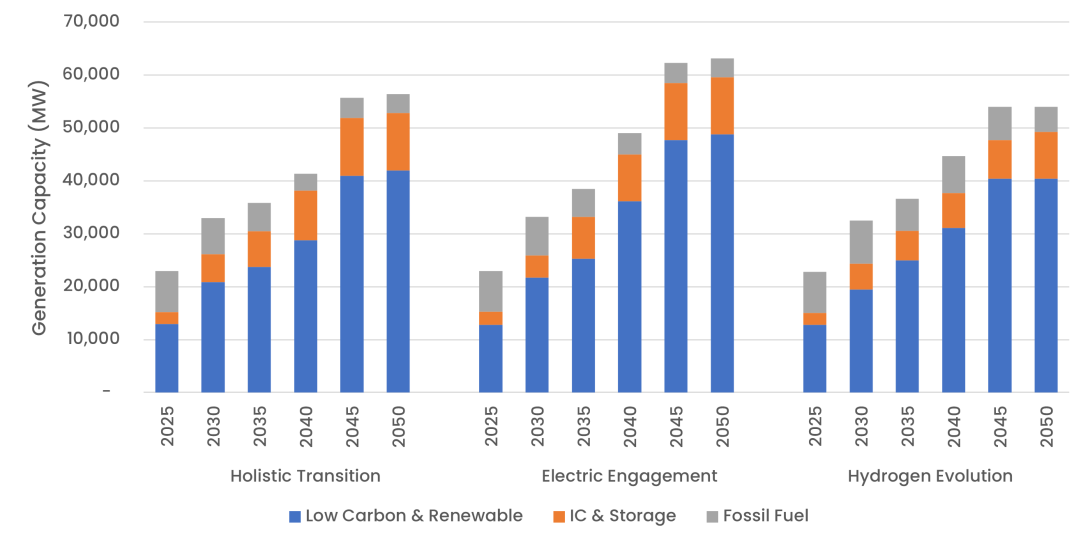
Low carbon and renewable generation is expected to grow across all pathways, mainly offshore wind and in later years CCS-equipped gas and biomass. Fossil fuel capacity is expected to decline more gradually with a continuing need to support security of supply in the region and keep synchronous generating capacity available on the network.
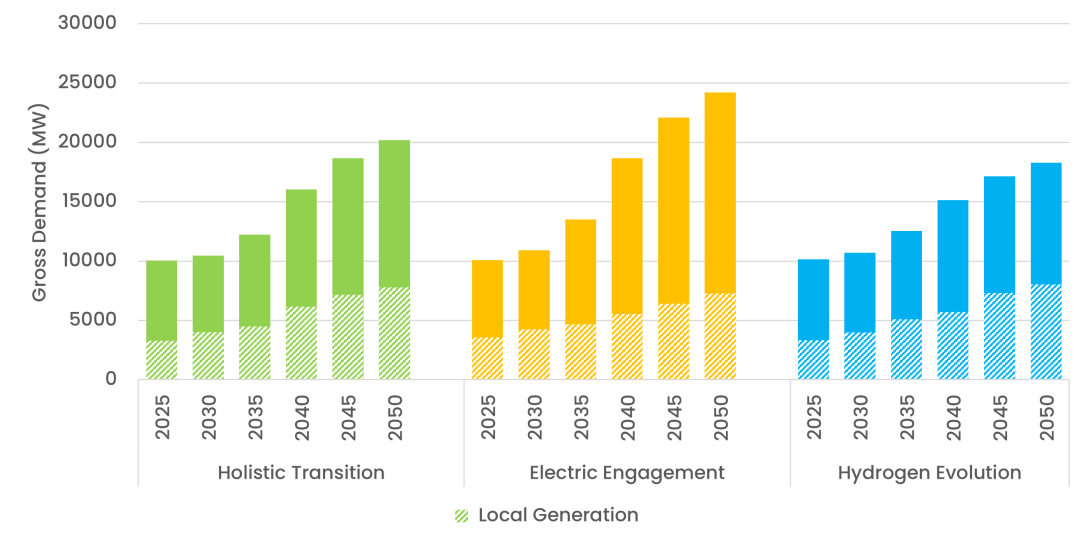
By 2030, generation capacity is projected to reach 32 GW, with gross demand rising to 10 GW. The North of England is expected to have significant local generation capacities which will reduce net demand and increase transfers to the Midlands and South, driving additional transmission requirements.
Generation Capacity
Gross Demand
Boundary Regions
Click on the regions below to expand the boundary and understand its capability and challenges.
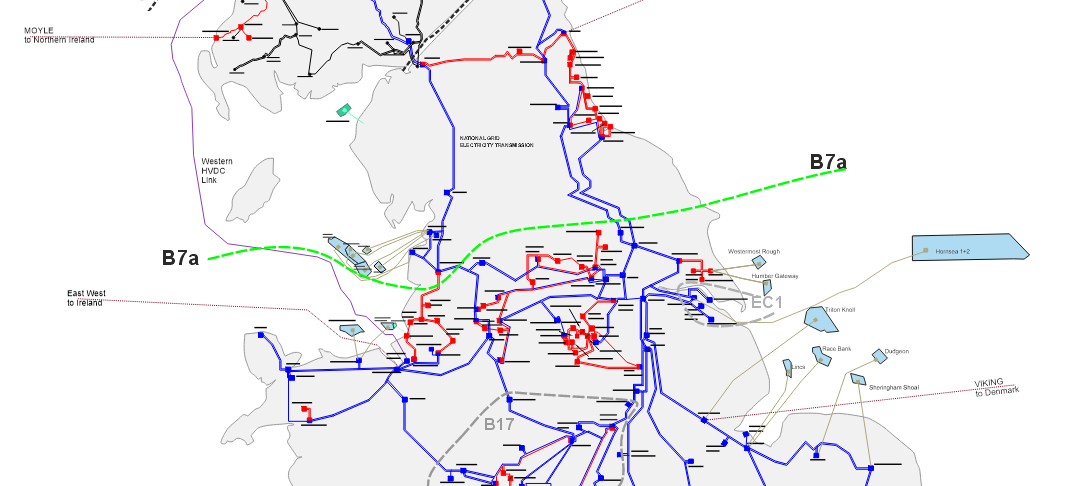
Across all FES pathways the economy required transfer and expected power flows are already beyond the present boundary capability. This suggests a strong need for network development to manage the increasing power flows.
The FES show a lot of variable renewable generation in the north of boundary, meaning the spread of boundary power flows is very wide. During periods with low northern generation output it is credible to have power flowing from south to north feeding northern demand.
Offshore wind contributes heavily to the increase in flows across B7a, multiple offshore developments are expected to connect onshore in Northern England - above B7a.
Boundary flows and base capability
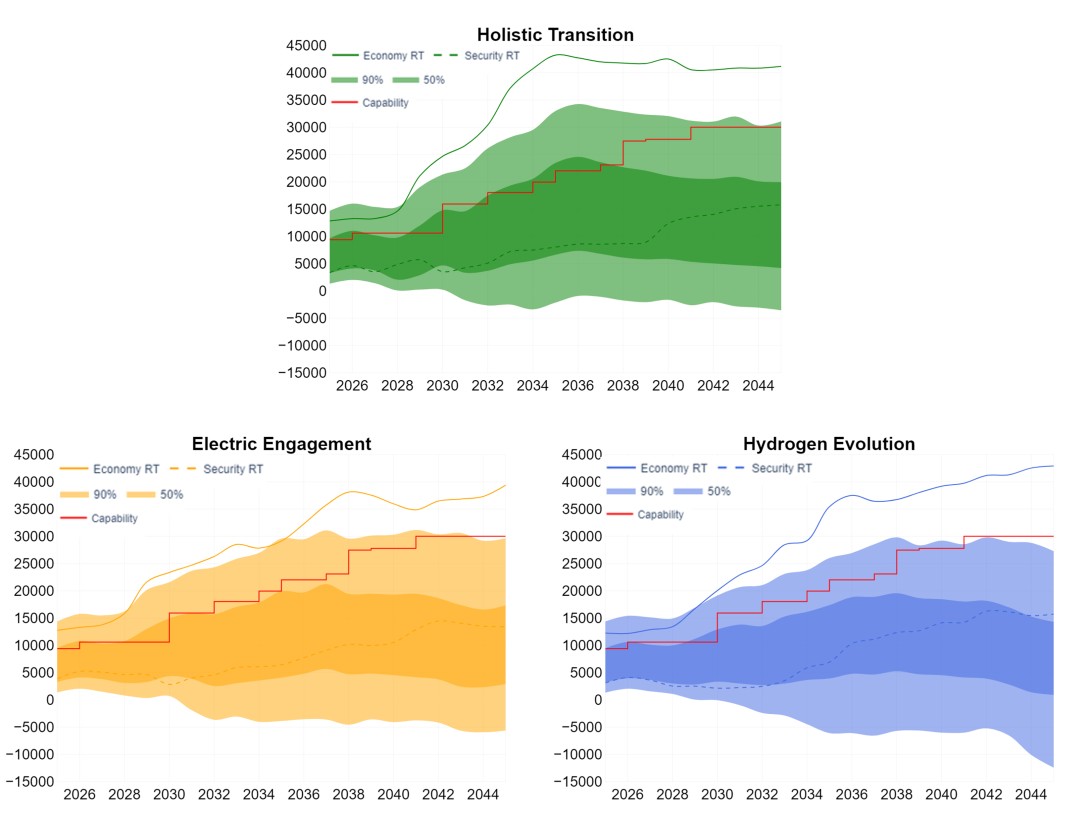
View an interactive version of the graph
The boundary capability is limited to 9.4 GW due to thermal constraint on the Penwortham – Washway Farm 275kV circuit.
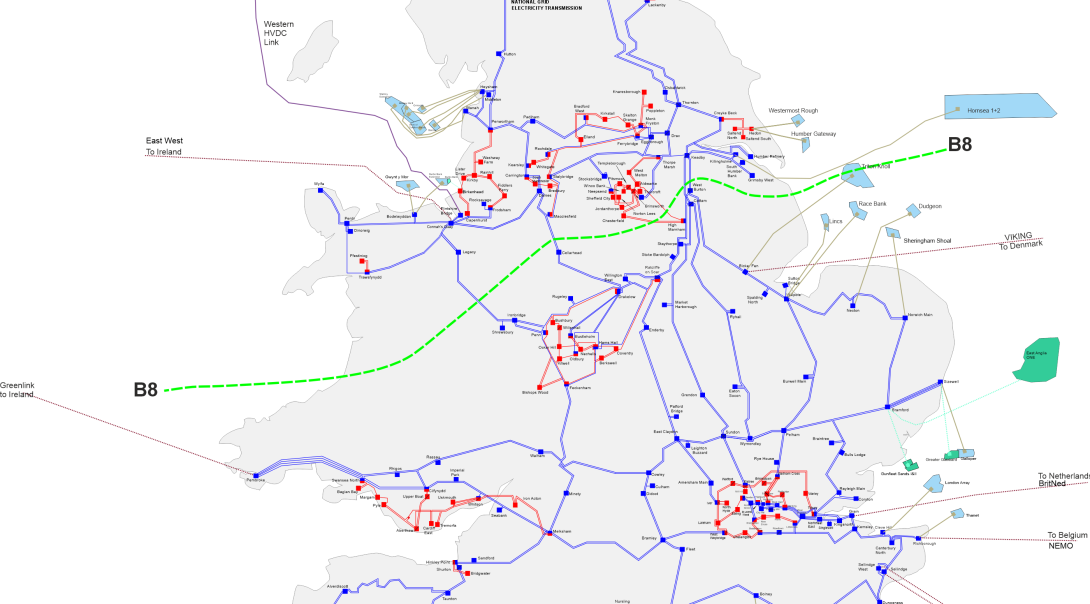
Across all FES pathways, both the SQSS economic transfer requirement and expected power flows grow significantly over time, surpassing the existing boundary capability. This suggests a strong need for network development to manage the increasing power flows.
Unconstrained flows do outstrip expected boundary capability until the late 2030s, suggesting the potential for constraints across this boundary in future years. Timely delivery of recommended reinforcements across B8 will be key to mitigating future constraint costs and innovative solutions for managing constraints may be required in this region.
Boundary flows and base capability
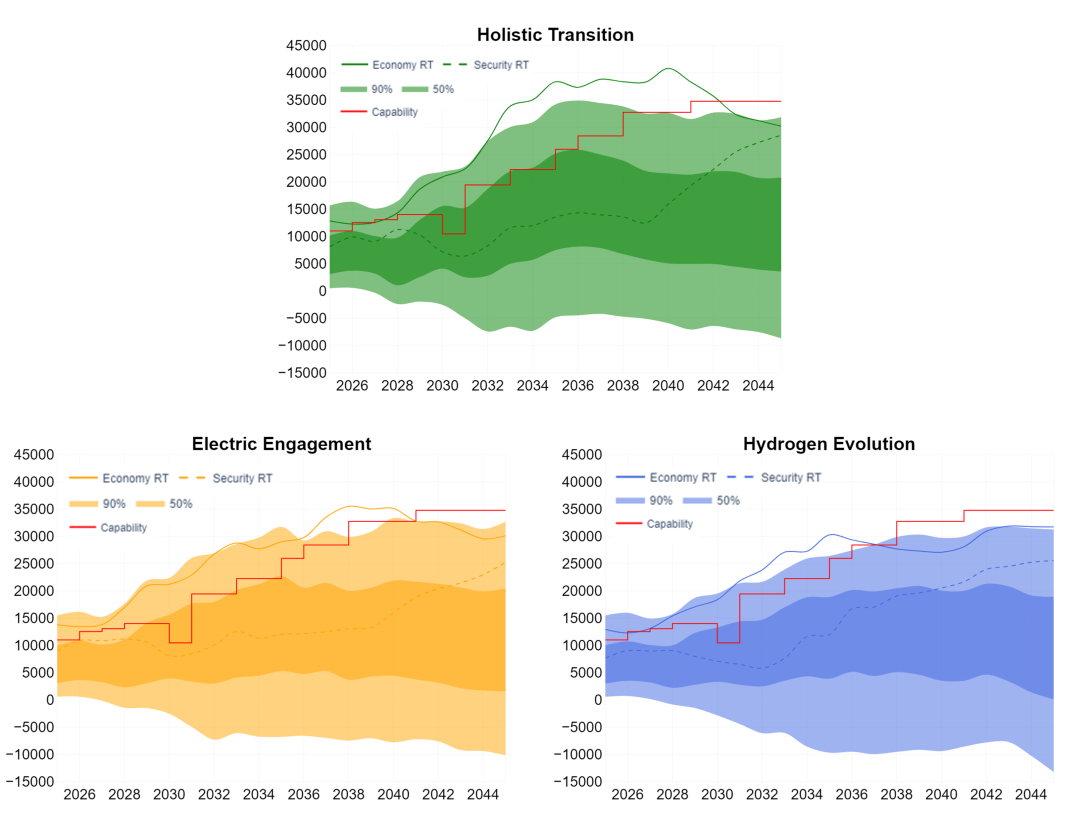
View an interactive version of the graph
The boundary capability is limited to 11 GW due to thermal constraint on the Keadby – West Burton 400kV circuit.