
Strategic planning
Strategic planning is essential to delivering value for…
11 Sep 2026 - 3 minute read
The challengeThe National Audit Office’s report published today highlights the scale of the…


Producing low-carbon energy from organic waste, residues and sustainable agricultural practices can deliver value to the energy system.
The conversion of organic residue into low carbon gas - known as biomethane - can help create a more affordable and sustainable energy system.
During a visit to Scotland’s distilling heartland of Speyside, we saw firsthand the potential for producing environmentally friendly energy from industrial by-products such as residues from the whisky industry.
A team from NESO went to Grissan’s Portgordon facility to understand how whisky production residues are processed into biomethane and organic soil conditioner.
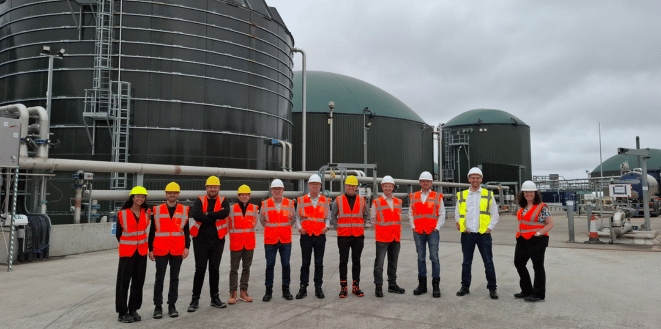
Grissan specialises in large-scale advanced anaerobic digestion technology to process cereal-based feedstock into biomethane. From 2027, they will produce enough low carbon gas to meet around 4% of Scotland’s demand for natural gas, with the Portside facility generating sufficient biomethane each year to decarbonise over 30,000 homes.
The biomethane displaces natural gas, or other fossil fuels, and is currently used mainly for heating and transport. Grissan also produces liquid and fibre organic soil conditioners at its sites to support sustainable, regenerative local farming.
This summer, we published our biomethane report, which explored the benefits of biomethane in the energy system and what factors need to be considered to increase production.
The report identified potential for biomethane to scale up and said a government-led, strategic approach, involving cross-sector collaboration, could help maximise the value that biomethane delivers to the energy system and the wider energy transition.
“It was great to see the work being done by Grissan in Speyside, using anaerobic technology to create low carbon gas from the residue of the distilling process.
“Speyside is synonymous with the finest Scotch whisky – an industry which supports 41,000 jobs in Scotland and makes a massive contribution to the economy.
“It was impressive to see how this traditional industry is embracing inventive and resourceful methods to produce low-carbon energy, supporting decarbonisation, local farming and the circular economy.
“NESO’s recent ‘Biomethane’ report has emphasised that a strategic approach involving government and collaboration across sectors could make the most of the benefits biomethane can bring to the energy system.”
“We were delighted to welcome senior representatives from the National Energy System Operator to our Portside facility to see the important work Grissan is doing to decarbonise Scotland’s gas supply.
“NESO’s recent recognition of biomethane as a strategic technology that provides on-tap green energy is another important step as the industry looks to scale up further in Great Britain. Large-scale plants such as our Portside facility have a crucial role to play in facilitating cost-effective decarbonisation in a way that supports local economic growth.
“More large-scale plants are ready to be deployed today across the country, displacing fossil sources of methane, liquid carbon dioxide and fertiliser. The Government must now do all it can to scale-up this crucial industry to deliver a renewable, reliable and ready source of power.”