
How is electricity generated using wind?
Wind is what we call ‘clean energy’. It is free of cost (at point of generation) and is a reliable source of energy for countries all around the world. Every day, wind turbines capture the wind’s power and convert it into electricity.
How does wind produce energy?
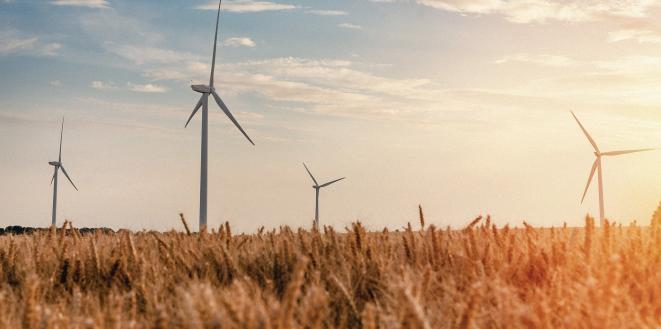
It’s a fairly simple process: When the wind blows, the turbine's blades spin which captures energy. This energy is then sent through a gearbox to a generator, which converts it into electricity for the grid, with a special device called an inverter.
How does wind benefit the grid?
Our July 2025 findings showed that wind generated 19.1% of electricity on the grid, and in December 2024, Britain’s wind record hit 22.5GW which was enough to power all UK homes for a day!
Our recent Beyond 2030 report recommends around £58 billion in direct investment for offshore and onshore network upgrades. These upgrades will help connect an additional 21GW of offshore wind power, along with various other low carbon energy sources across Great Britain.
The UK’s geographical position means wind provides a reliable source of energy. But we need turbines, and lots of them, to turn it into useful energy.
James Kelloway, former Energy Intelligence Manager at NESO says: “Just one turbine can make the electricity to power 16,000 homes a year. When you think about the multiple wind farms all around the UK, you can see that adds up to a lot of power.”
The latest windfarm being built in the UK, Dogger Bank, will be the biggest yet. More than 80 miles from land, it will house around 200 of the world’s most powerful wind turbines, each almost as tall as The Shard, and populate an expanse of sea as large as North Yorkshire. Some of the newest turbines can power a home for a day with just one rotation of its blades.
Investments such as this help our progress in decarbonising British electricity.
Further work towards our ambitions
We have a team that looks into the weather forecast so that we are able to estimate how much renewable energy like wind might be produced on any given day.
We cannot run the electricity system on wind power or renewables alone, which is why it's important that Britain has a diverse portfolio of generation technologies, so that our electricity needs can still be met when the wind doesn’t blow. Our teams across NESO are working hard to plan for our future, primarily renewables based, energy system.
You can see real time information on how GB’s electricity is being produced on our free Carbon Intensity app. Download the app from Google Play Store and The App Store.