
Future energy
Innovation in Action: The groundbreaking ideas tackling…
31 Jul 2026 - 2 minute read
Innovation is central to building a more resilient and cleaner energy system. That’s why we’re…

This week NESO (National Energy System Operator) is publishing its Early Outlook for Winter 2026/27 and a review of winter 2025/26. In parallel, National Gas is publishing its review of last winter.
Keeping Great Britain's energy system secure requires more than having enough energy available. It depends on careful planning, real-time operation and close coordination across the electricity and gas systems.
No single organisation does this alone. A key part of Britain's energy resilience is the close partnership between NESO and National Gas.
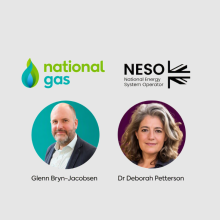
In this joint Q&A, Dr Deborah Petterson, Director of Whole Energy System Resilience at NESO, and Glenn Bryn Jacobsen, Director of Energy Systems and Resilience at National Gas, explain how that partnership works in practice and why that matters all year round.
NESO:
Our role is to operate Great Britain’s electricity system in real time, keeping supply and demand in balance every second of every day. We also look further ahead, planning for future challenges and ensuring the system is ready for changing conditions.
That means working closely with organisations across the energy sector, including National Gas. By sharing information and planning together, we can make sure the energy system remains secure and resilient both today and in the future.
National Gas:
National Gas operates the National Transmission System, transporting gas safely across Britain. Our role is to manage the physical network – maintaining pressures, directing flows and balancing supply and demand in real-time, so gas is available where and when it’s needed.
NESO:
Gas remains an important part of keeping Britain’s electricity system secure, so close coordination between NESO and National Gas is essential. We continually share operational information and forecasts, helping us build a common understanding of system conditions both now and in the future.
That shared picture allows us to anticipate potential challenges, make informed decisions and respond quickly as conditions change.
National Gas:
We maintain close operational coordination throughout the day. That includes sharing data, aligning forecasts and maintaining a regular dialogue, so we have a clear view of system conditions. This ensures decisions are based on consistent information and we can respond quickly to any changes on the network.
NESO:
Britain’s energy system is becoming more diverse, with more renewables, storage and flexible technologies. This creates opportunities, but also a more dynamic system to manage.
To respond, we have transformed how we operate. Activity in the control room has increased significantly, from around 35,000 instructions a year to more than 15,000 actions in a single day, supported by digital tools and automation.
Despite these changes, our focus stays the same: maintaining a reliable energy system. Gas continues to play an important role, which is why close coordination with National Gas remains essential.
National Gas:
The system has become more dynamic and less predictable. We’re seeing faster changes in demand, particularly as gas plays a flexible role in supporting electricity generation when renewable output is lower. That can mean demand increases quickly over short periods.
At the same time, supply is becoming more diverse and increasingly influenced by global markets. These factors mean the network needs to respond more quickly and operate under a wider range of conditions than in the past.
NESO:
Energy security is national security – it underpins every part of modern life. We work closely with Government, Ofgem, network companies and industry partners to assess risks, strengthen resilience and prepare for a wide range of scenarios.
Our review of the North Hyde substation outage, which led to the closure of Heathrow Airport, highlighted the important interdependencies between energy, transport, telecommunications and other essential services.
We regularly test our response plans with National Gas and wider industry partners through emergency exercises, helping ensure we are prepared to respond effectively in a range of circumstances.
National Gas:
From our perspective, energy security is about ensuring the gas transmission system can operate safely and reliably across a wide range of credible stress scenarios – not just meeting demand in normal conditions, but sustaining operation through disruption, uncertainty, and rapid change.
That resilience rests on three elements: designing the system to defined standards, preparing for cross-sector stress events, and restoring capability quickly when disruption occurs. As the UK has become more import-dependent, with greater exposure to global markets and more variable supply-demand dynamics, the system now faces a different and more complex risk profile.
It is a critical focus because gas underpins both heat and power. Around 24 million homes rely on it, and it provides the flexibility that supports electricity security of supply – particularly during periods of stress. As a result, resilience in the gas system is foundational to wider national energy resilience.
NESO:
This week NESO publishes its Early Outlook for Winter 2026/27, providing an early assessment of system conditions, risks and uncertainties so industry and market participants can prepare well in advance of winter.
What is less visible is the scale of preparation that sits behind those assessments. Throughout the year we model tens of thousands of scenarios, covering different weather conditions, demand patterns and potential system events, to understand how the energy system would perform under a wide range of circumstances.
Britain has one of the most reliable electricity systems in the world, delivering 99.999% reliability. That resilience comes from careful planning, investment and the expertise of engineers and operators working across both electricity and gas to keep energy flowing.
National Gas:
Headline figures like supply margins are important, but they don’t reflect how the system operates day to day.
What matters is how the network performs under different conditions. For example, rapid changes in demand or reduced infrastructure availability can still create operational challenges, even when supply looks comfortable overall.
Winter readiness is about how the system responds in real time, rather than any single metric.
Winter readiness is about more than a single number. It depends on constant coordination across the whole energy system. As the system evolves, partnerships such as those between NESO and National Gas will remain central to delivering reliable, clean and affordable energy for homes and businesses year round.