
Energy Explained
Positive progress on skip rates and next steps
7 Jul 2026 - 4 minute read
Skip rates have become one of the most talked about metrics in electricity system operation over…

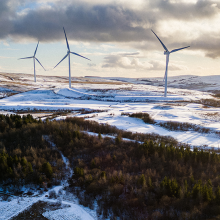
While many of us will be hoping for snow across Great Britain on Christmas Day to complete the perfect festive day, that’s not quite the case for our control room experts. That’s because there’s a chance this Christmas Day could be the greenest on record if the weather remains relatively mild and windy over the festive season.
That means zero-carbon sources like wind and solar could be providing a larger share of our electricity than ever as we’re cooking our Christmas dinners and watching festive TV together.
Christmases in Britain are now cleaner and kinder to the planet than ever before, with over 40% of electricity generation on Christmas Day last year (2024) coming from renewables. That’s significantly more than just 1.7% in 2009 thanks to Britain increasing our ability to utilise electricity from zero-carbon sources more and more each year.
Just this year, an extra 2 GW of wind and 3 GW of solar came onto the network, taking Britain’s total renewables capacity to an historic high of 53 GW to drive down carbon intensity.
As part of the shift towards a modern flexible power system, there’s also been a huge increase in battery capacity to store clean energy on Britain’s grid, now totalling 8.9 GW for our control room to dispatch when it’s needed. This year an extra 3.1 GW of battery storage has been added to the network – which would be able to cook nearly 100,000 Christmas puddings.
Pairing more generation and storage capacity from renewable sources than ever with lower-than-average energy demand for the time of year, could lead to our greenest 25 December ever.
2023 currently holds the title of the greenest Christmas Day ever recorded, with a carbon intensity of 30 million grams of CO2 – five times less emissions than the same day in 2018. We’ll be keeping a close eye on how Great Britain’s carbon intensity looks on the day hoping for a new record.
Ever wondered how our festive behaviour impacts the electricity system? Here’s some top facts about the day.
Britain smashed the wind generation record earlier this month, when turbines generated a whopping 23.8 GW of electricity in just half an hour on 5 December. That’s enough power to light up 2.975 billion strings of 100-bulb LED fairy lights which, if tied together, would stretch 14.8 million miles – enough to wrap around the globe nearly 600 times.
Earlier this year, Britain also broke the solar generation record, exceeding 14 GW for the first time. That’s enough to power 93 million TVs to watch the King’s speech – roughly the equivalent of every single television set owned in Britain being on in unison.
“A far cry from the smoggy Dickensian scenes of a ‘Christmas Carol’, seasonal festivities in Britain today are more likely to be powered by clean homegrown sources of renewable energy than ever before.
“2025 saw us run our electricity grid at 97.7% zero carbon for the first time in history. And this Christmas there’s the possibility we’ll see the lowest ever carbon intensity on the network on the big day itself. So, as you tuck into your turkeys, binge on festive telly, or charge your new gadget, one thing’s for sure – the engineers working in our control room won’t be hoping for a white Christmas - but an even greener one!”
If you find yourself curious about what’s providing your electricity on Christmas Day, download the NESO app. You can see a breakdown of electricity generation sources and the carbon intensity of electricity in the region where you’re spending the day. And, if we do have a record-breaking Christmas Day, you’ll be the first to know.