
Energy Explained
Emergency Assistance: what it is, and why we used it over…
14 Oct 2026 - 3 minute read
Keeping Great Britain's electricity system secure is a core responsibility at NESO. Every day, we…


In 2025, Great Britain achieved some major milestones on our journey to ensuring a secure, affordable and clean energy system. Take a look back at where our electricity came from in 2025 and some of the notable events through the year.
One of our objectives is to show it’s possible to operate Great Britain’s electricity system securely and reliably using purely zero-carbon sources for a 30-minute period ahead of the Government’s clean power 2030 target. We now have all the tools in place for this to happen when the conditions are right, and the market offers the right mix of energy. We came closer than ever to achieving this on 1 April when zero-carbon sources provided 97.7% of our electricity for 30 minutes. That meant around 28 million homes and over 5 million business across Great Britain were being powered by zero-carbon electricity.
2025 saw renewables (wind, solar, hydro and biomass) produce a record 44% of our electricity (up from 42% in 2024) - amounting to a total of more than 127 terawatt hours (TWh) of electricity for Britain – the highest ever recorded - beating the previous high of 119TWh in 2024. This represents a threefold increase on the 43 TWh generated by renewables in 2015.
One growing zero-carbon source is solar, which is now providing nearly a third more of our electricity than it was in 2024. In December, the Met Office confirmed that 2025 was the UK’s sunniest year on record. By expanding our capacity to use this abundant and low cost energy source, we can make significant progress toward a secure, affordable, and sustainable energy future.
Great Britain didn’t just achieve a maximum zero-carbon record last year though, here’s some other achievements:
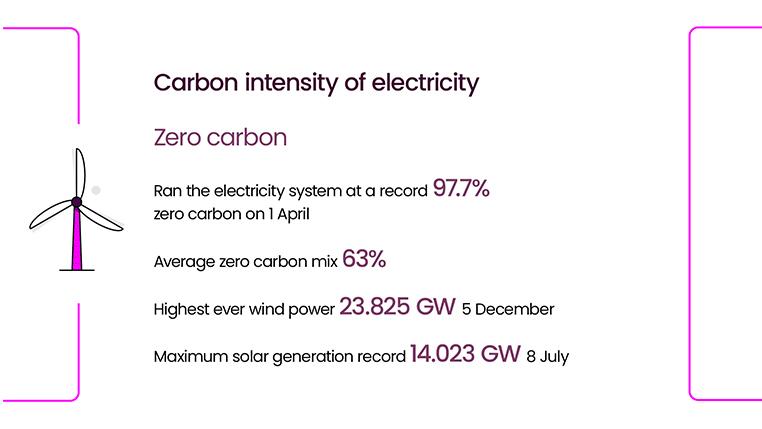
Wind was the largest source of electricity generation in 2025 for the second year in a row, accounting for 29.7%. Renewables generated an average of 63% of our electricity during 2025.
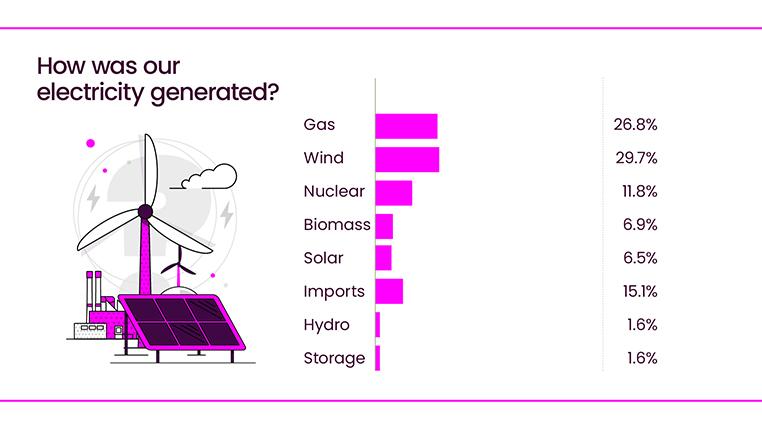
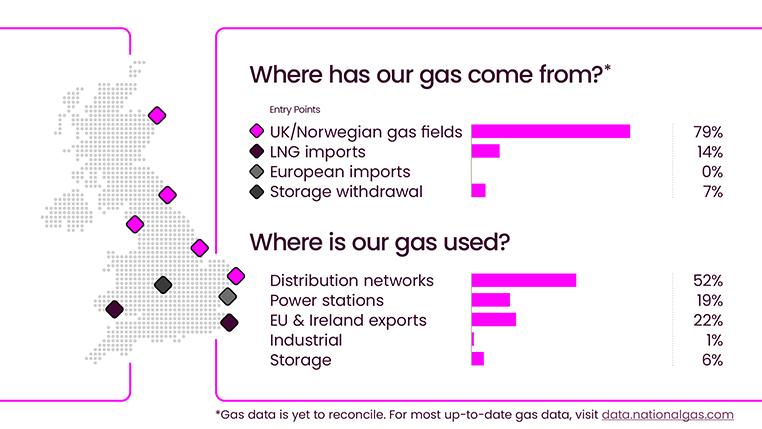
Gas was our second largest source of electricity, providing 26.8%. Most of our gas supply, 79%, came from UK and Norwegian gas fields, with Liquefied Natural Gas imports providing 14%, and storage withdrawal 7%.
Distribution networks transported 52% of our gas to homes and businesses and 19% was used in power stations to generate electricity.
Through 2025 we maintained Great Britain’s world leading reliability and security of supply standards. Our control room work 24/7, 365 days a year to ensure we all have the electricity we need while managing fluctuations in electricity supply and demand. Demand remained at its lowest during the summer months, as longer, brighter days reduce the need to light and heat our homes.
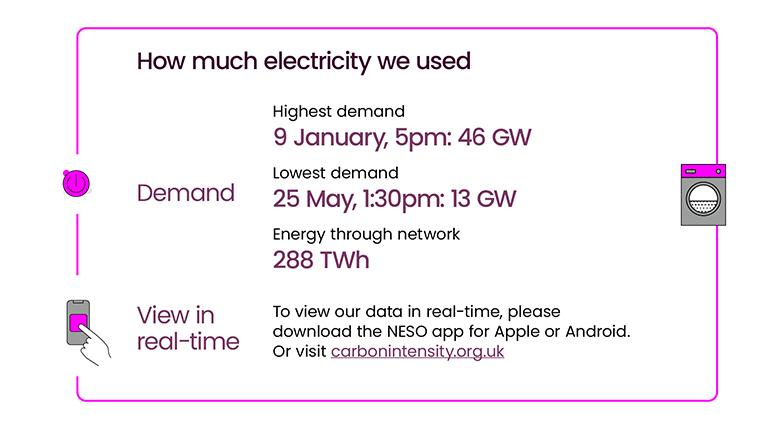
It hit an annual high of 45,851 MW on 9 January at 5pm and the lowest demand was on 25 May at 1:30pm at 12,912 MW showing the variety of demand our control room have to prepare for, to ensure a secure supply of electricity all year-round. The difference between maximum and minimum demand was 32,939 MW, up from 30,022 in 2024.
One notable moment for our control room was the UEFA Women’s Euro 2025 final where electricity demand spiked by 400 MW at halftime as the nation collectively used appliances like kettles to make a cup of team and open the fridge for a halftime snack. There was also a 150 MW rise in demand after Chloe Kelly’s winning penalty.
“It’s hard to believe how far Britain has come on its clean power journey over the past quarter of a century, with renewables now producing 44% of our electricity in 2025 – up from just 3% in the year 2000.
“Hitting 97.7% zero carbon last year really shows what is possible, and I look forward to seeing if we can break the ultimate record of running Britain’s electricity grid entirely zero carbon in 2026.”
Download our free Carbon Intensity App from the Google Play Store or the App Store to see real time information on how GB’s electricity is being produced.
