

Balancing costs
An introduction to balancing costs
At NESO, our role is to ‘balance’ the grid. We must ensure we supply enough electricity to meet the needs of our customers and manage any restrictions that may be on the network.
We need a range of tools to be able to balance the grid effectively. This involves energy trading, balancing services, and the Balancing Mechanism (BM). Self-dispatch and re-dispatch strategies are also used in the UK energy market to handle supply and demand and any system limitations.
Balancing costs are those expenses associated with (A) the Balancing Mechanism, (B) balancing services, and (C) energy trading.

Balancing costs
(A) Due to the complex nature of balancing the grid, many parts contribute to the overall Balancing Mechanism costs. The following actions can include costs in these categories:
- Energy actions fix any problems in the system by telling power plants to make more or less energy to match what is needed.
- System actions deal with the physical limits of the energy system. Operators (in the control room) see these actions as adjusting power plants to balance the system’s voltage, speed, stability, and temperature in the short term.
The price of these actions depends on the bids made by energy companies in the BM. We use the balancing mechanism units (BMUs) that provide the required energy at the lowest cost.

Balancing services
(B) Balancing services are additional services we purchase outside of the Balancing Mechanism to improve market and procurement efficiencies
(C) We trade energy to balance the system based on predicted energy needs. This secures the system, prepares for limitations, and reduces costs to meet our requirements. While trading with other companies, our goal is to minimise the total cost of our balancing activities.
Rising balancing costs
The last few years have seen considerable increases in balancing costs. The most notable drivers of the rise in costs are associated with the procured ancillary services, higher wholesale prices of electricity, and higher bids and offer prices submitted in the BM. It’s important to note the substantial increases in wholesale prices over the last few years, their knock-on effect on the Balancing Mechanism, and their impact on the marginal generation of electricity.
Further, the electricity system is becoming more volatile on the generation side of balancing (increasing variable sources of electricity) and on the demand side of balancing (more significant variability from DER participation and integration).
While we do not control electricity prices, we undertake many significant endeavours, initiatives, and reforms to equip ourselves and the industry with the suitable systems and markets. And the capabilities to manage an evolving electricity market and system at the optimal cost.

2025 Annual Balancing Costs Report
This report provides a look back on recent balancing cost trends and drivers and provides a broad view of potential future balancing costs along with NESO’s role in minimising costs.
Balancing Costs Winter Report 2024/25
The NESO balancing costs winter report assesses the market and system conditions of the 2024/25 winter period, and how Balancing Costs were impacted.
Read our Balancing Costs Winter Report 2024/25
Our strategy to minimise balancing costs
Read our balancing costs strategy
Balancing costs have risen significantly over the last few years due to a multitude of factors. We have developed a strategy to minimise these rising costs by leveraging initiatives in:
These are initiatives that we have implemented to improve the design of the GB network and to manage the delivery of changes that optimise availability and reduce constraints.
Costs associated with congested electricity networks make up a large proportion of balancing costs. Network planning and optimisation initiatives therefore have potential to make a significant impact on constraint costs. These initiatives are, and will continue to be, in alignment with industry, government, and public interest.
Some of these major initiatives include our Constraint Management Pathfinder (Intertrip Service), which generates about £200m per year in balancing cost savings, and the analysis and recommendations that we have contributed to the Accelerated Strategic Transmission Investment (ASTI) framework, which is estimated to provide £2.1b in savings beyond 2025.
These are initiatives where we design and procure new services to balance the system, with greater competition at an optimised price.
We're always improving the market and service design in GB. As part of this, we've made many changes to our ancillary services. For example, the Response Reform added three new response products. And the Reserve Reform added three new reserve products. The introduction of these products has produced an estimated £33m in savings before 2025 and more than £165m in savings after 2025. These new response and reserve products also enable the decarbonisation of our network by securing losses on a lower inertia system and enabling new technologies to enter into these markets.
In an evolving energy industry, we want to ensure that we are most effectively using innovative solutions to drive down costs. We engage in many projects
Some of these include our innovation D Heat project with SSEN and the engagement and analysis that is produced for the frequency risk and control report, which includes an assessment of the magnitude, duration and likelihood of transient frequency deviations, forecast impact, and the cost of securing the system. This confirms which risks will or will not be secured operationally.
Balancing GB’s electricity system is an incredibly complicated task, with significant and difficult decisions being made from second-to-second. Our control room has fantastic capability in balancing the grid, but we are always looking to optimise our systems and processes to ensure that we are keeping up to date with the high standard that we like to set, and that we are adapting to industry changes.
Our Balancing Programme has many initiatives that will improve the capability and forecasting of our control room even further. There is room for improvement around real time metering protocols and requirements that would benefit the control room’s visibility over generators in Great Britain.
Balancing Costs in Consumer Bills
Balancing costs are one of many components making up consumer energy bills. The dashboard below provides a visualisation of balancing costs in a typical household electricity bill and how these costs have changed over time.
BSUoS dashboard
Balancing costs reduction portfolio
We keep trying to strike the right balance between balancing costs. We're running an evolving system. And we've been taking many initiatives to cut expenses in our cost balancing strategy. Explore our portfolio on cutting these costs. You will discover the savings it creates and how.
Work to Improve Information Accuracy
Since October 2023, we have been undertaking a piece of work to quantify the scale of the inaccuracy of certain information submitted to us for the purposes of Balancing. There are several information inaccuracies that we have identified that create additional challenges for us in balancing the GB electricity system. In some cases, inaccurate information can lead to greater Balancing Costs being incurred, but more accurate information can also help us balance the system and maintain system security more effectively.
Webinars
Sharing of FPN Best Practices Workshop 16-12-2024 - Watch webinar
Documents
The NESO balancing costs winter report assesses the market and system conditions of the 2024/25 winter period, and how Balancing Costs were impacted.
The NESO balancing costs summer report assesses the market and system conditions of the most recent summer period, and how Balancing Costs were impacted.
The NESO balancing costs winter report assesses the market and system conditions of the 2023/24 winter period, and how Balancing Costs were impacted.
The Clean Energy Package outlines NESO's progress to operating a renewable energy system and the proportion of renewable redispatch under Article 13.
| Name | Published Sort ascending |
|---|---|
| Daily balancing costs 11-11-2025 | 11 Nov 2025 |
| Daily balancing cost 10-11-2025 | 10 Nov 2025 |
| Daily balancing costs 09-11-2025 | 9 Nov 2025 |
| Daily balancing costs 08-11-2025 | 8 Nov 2025 |
| Daily balancing cost 07-11-2025 | 7 Nov 2025 |
| Daily balancing costs 06-11-2025 | 6 Nov 2025 |
| Daily balancing cost 05-11-2025 | 5 Nov 2025 |
| Daily balancing costs 04-11-2025 | 4 Nov 2025 |
| Daily balancing costs 03-11-2025 | 3 Nov 2025 |
| Daily balancing costs 02-11-2025 | 2 Nov 2025 |
Balancing market review 2022
The NESO Balancing Market Review reports look at trends in the balancing markets and key drivers of cost in the Balancing Mechanism. It covers the work led by our market monitoring team, including a review of market activity to support the process.
Daily balancing costs archive
| Name | Published Sort ascending |
|---|---|
| Daily balancing costs - February 2024 | 1 Feb 2024 |
| Daily balancing costs - January 2024 | 1 Jan 2024 |
| Daily balancing costs - December 2023 | 1 Dec 2023 |
| Daily balancing costs - November 2023 | 1 Nov 2023 |
| Daily balancing costs - October 2023 | 1 Oct 2023 |
| Daily balancing costs - September 2023 | 1 Sep 2023 |
| Daily balancing costs - August 2023 | 1 Aug 2023 |
| Daily balancing costs - July 2023 | 1 Jul 2023 |
| Daily balancing costs - June 2023 | 1 Jun 2023 |
| Daily balancing costs - May 2023 | 1 May 2023 |
MBSS
MBSS archive

Events and engagement
We regularly organise workshops with key industry members to discuss balancing costs. The aim is to provide an open forum for views on the causes and ways of mitigating high costs in the future. If you would like to know about any future engagements send an email to [email protected].
Questions about balancing costs
Our FAQs will help you answer any questions. You can submit new questions or suggestions via [email protected].
Balancing costs data and reporting
Datasets
We publish a suite of data relating to balancing costs, including data on forecast and historic balancing costs, including Balancing System Use of Service (BSUoS) and balancing services charging reports.
BSUoS reports

The BSUoS charge recovers the cost of day-to-day operation including the cost of balancing the electricity transmission system.
Incentives reporting on balancing costs

We are regulated by Ofgem and all of our procurement of balancing services are outlined under our Standard License Condition C16. Ofgem assess our performance against their RIIO (Revenue = Incentives + Innovation + Outputs) framework. One of the criteria to which we are measured against is 'value or money' - relating to balancing costs.
Operational Transparency Forum balancing costs analysis
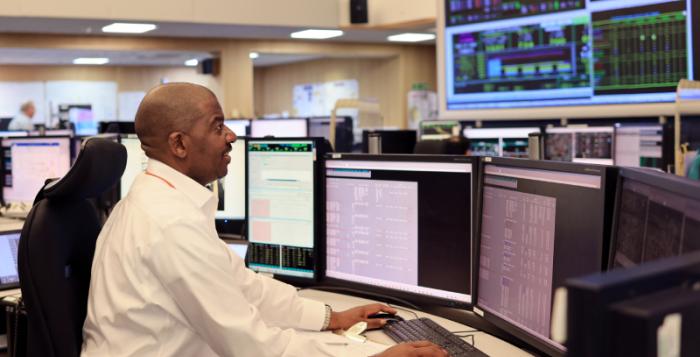
Every Wednesday, we hold an open technical industry forum to discuss recent operational actions we have taken in the Electricity National Control Centre (ENCC) and answer any questions. Often the analysis and commentary provided in these forums is purposefully based around Balancing Costs.