Image
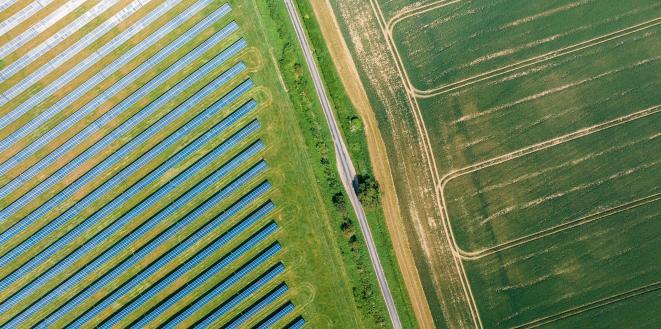
Contrast of motorway in the middle of image and green fields both sides

Electricity Ten Year Statement (ETYS)

The Electricity Ten Year Statement (ETYS) is NESO’s view of future transmission requirements and the capability of Great Britain’s National Electricity Transmission System (NETS) over the next ten years.  

The ETYS is important in helping us to understand where investment and development are needed to help us achieve our net zero ambitions. Our key messages explain that the key system needs insights from our latest Future Energy Scenarios (FES) analysis.

Solar panels on left side of field and right side is farmers field

About the ETYS

The ETYS is a well-established network development publication and sits at the heart of our network planning process. Using data from our FES, we identify points on the transmission network are identified where more transfer capacity is required (through reinforcing the network) to continue delivering electricity reliably. Once we have assessed these network requirements, we invite stakeholders to propose solutions.   

These proposals were traditionally assessed through our Network Options Assessment (NOA) process, where the most economic and efficient solutions were identified and given a recommendation to proceed, whilst others are put on hold or stopped. 

Wind Turbines across land with a country road and trees

Transitioning to the CSNP

We’re transitioning from the NOA & ETYS, to a new Centralised Strategic Network Plan (CSNP). The CSNP aims to ensure holistic development of the NETS, integrating key elements of our existing network planning process while providing a more detailed long-term approach.  

Our most recent investment plan, the Beyond 2030 report, was released in March 2024. This plan serves as a stepping-stone before we fully develop and publish the CSNP. Ofgem have asked us to refresh this transitional plan following publication of the Government Clean Power 2030 Action Plan.   

Once the CSNP is published, it will take over in outlining the transmission network requirements, meaning some key information from ETYS will be integrated into the CSNP. The CSNP methodology which we recently consulted on, will include changes to how system needs are assessed, in line with Ofgem’s CSNP decision. In the future, we will aim to have a single set of system needs for both the short and long term as part of the CSNP, which will be reviewed every three years. 

Phone showing NESO app

ETYS 2024

The Electricity Ten Year Statement outlines our view of the National Electricity Transmission System over the next ten to twenty years.
Key messages

NESO is collaborating with industry partners and the UK government to accelerate the decarbonisation of the electricity network. In November 2024, after being commissioned by the Secretary of State, NESO published its Clean Power 2030 report which provides advice to the government on a range of pathways to achieving clean power by 2030. Our advice indicates that this goal will require a once-in-a-generation shift in both approach and pace of delivery. 

In December 2024, the UK Government published their Clean Power Action Plan

The implementation of the network plan set out in the Pathway to 2030 report in 2022 will be crucial to these clean power ambitions. Of the 88 projects recommended in Pathway to 2030, 80 were identified as being critical to achieving clean power in 2030 under the Clean Power 2030 pathways. Three of these projects will need to be accelerated to 2030 delivery. Further reinforcement of the network is needed after 2030, as detailed in Beyond 2030, published in March 2024. 

Our analysis of the CP30 pathways has reemphasised the need for rapid action in the deployment of additional boundary capability, through new projects. 

Image
Two map images Anticipated network constraint regions in 2030 under the Clean Power pathways, Further Flex & Renewables (left) and New Dispatch (right).

Anticipated network constraint regions in 2030 under the Clean Power pathways, Further Flex & Renewables (left) and New Dispatch (right).  

The ETYS tells us how much power can safely move between areas of the electricity network. We have to ensure the power flowing between these areas doesn't go over the safe limit. If this does occur, we have to cut back on electricity generation, which can cost a large amount of money. 

The Beyond 2030 report on the "Holistic Transition" FES 2024 pathway suggests upgrades to the network that would allow more power to flow freely between areas. The heatmaps below show how these upgrades can significantly reduce constraints by increasing the power transfers across electricity networks.  

We are proactively developing solutions to reducing network constraint costs for the market, such as Constraint Management Intertrip Services (CMIS) for certain areas. These services help manage the flow of electricity and reduce costs. More solutions like this might be needed in the future to keep costs down and allow more customers to connect to the grid. 

Image
Two heatmaps illustrate the impact of the network reinforcement options recommended in the Beyond 2030 report on the "Holistic Transition" FES 2024 pathway, showing how these options can significantly reduce constraints by increasing the power transfers across boundaries. 

Voltage is a local system issue driven by changes in local generation, demand, and the evolving network. High voltage issues primarily arise in low load conditions, while low voltage issues arise in high flow conditions. In recent years we have seen limited voltage issues around the network and our analysis shows a growing requirement for voltage support over the coming years. We will continue to explore options to address these needs, including through NESO’s Network Services Procurement efforts. 

Potential voltage issues have been identified in a number of regions over the next 10 years: 

Regions with high voltage issues: 

  • Southern & Central Scotland
  • North West England
  • East of England
  • The Midlands
  • London 

Regions with low voltage issues: 

  • East England
  • The Midlands
  • London 
Image
Map detailing regions with high and low voltage issues

The CSNP is a coordinated, long-term plan for energy network planning in Great Britain looking out to 2050. Initially, this will focus on the electricity transmission network - onshore, offshore and interconnectors. Gas transmission and any proposals for a hydrogen system are expected to be included in future iterations. 

Through the CSNP – alongside the established boundary analysis previously communicated in the ETYS – we will expand our view of system requirements, including across a longer-term horizon, and lead on additional year-round thermal analysis, as well as identify wider residual stability and voltage needs. 

Our current network planning process will see two critical changes: 

  • The ability to fix projects within a delivery pipeline to provide certainty on network investments required for net zero and enable focus on detailed design.
  • A move to a three-year cycle, in alignment with the Strategic Spatial Energy Plan (SSEP), to provide decisive investment signals and allow additional time for option development. 

The SSEP will spatially map the optimal mix and location of clean generation and storage to meet forecast demand, net zero targets, and security of supply for all consumers. These will be optimised against high-level network needs as well as against cost, environment and community impact, economic growth, and other agreed objectives. 

The single view provided by the SSEP will drive investment decisions across the entire 25-year horizon of the CSNP. This will ensure alignment with government policy and help consider combinations of energy system and network options to maximise utilisation of existing networks. 

You can read the CSNP high-level methodology, SSEP methodology, and find details about future stakeholder engagement here.