
Strategic planning
Developing the SSEP together: transparency, collaboration…
1 May 2026 - 3 minute read
We brought energy developers together for the latest Strategic Spatial Energy Plan (SSEP) workshops…

As the independent system planner for electricity, we’re leading the transformation of Great Britain’s transmission network at NESO. Our ambitious plans include a significant rollout of High Voltage Direct Current (HVDC) technologies, which are essential for efficiently moving power across Great Britain, connecting offshore wind farms and strengthening interconnections with our neighbouring countries.
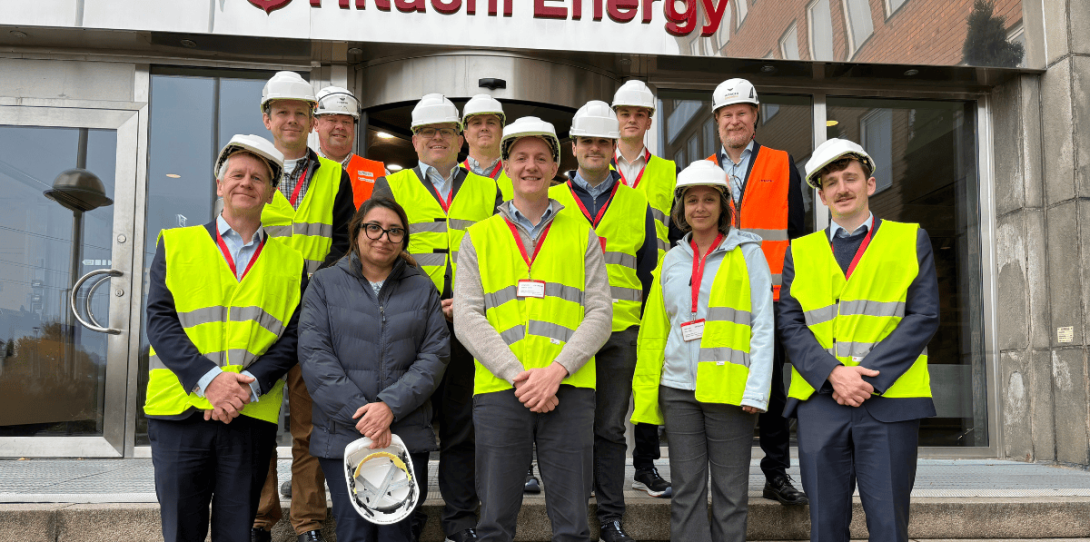
To understand more about how the supply chain is delivering these innovative technologies, we recently visited Hitachi Energy’s HVDC Technology Centre in Ludvika, Sweden. Below, Paul Wakeley, Head of Strategic Network Development, outlines what we learnt during the visit and our key takeaways.
During our visit, we toured their HVDC testing facilities, valve and transformer factories, discussed our strategic energy plans and gained valuable insights into the challenges and opportunities faced by global suppliers like Hitachi Energy. This engagement forms part of our wider effort to understand the supply chain dynamics, knowledge that will support our future network planning.
Our strategic plans, such as Beyond 2030, outline the transmission network needed to decarbonise Great Britain’s power system. By 2050, offshore wind could supply a large share of Great Britain’s electricity demand, with around 100GW of installed capacity.
Achieving this will require extensive HVDC transmission systems. We anticipate that by the 2030s, over 15,000 kilometres of HDVC cables will be needed, along with numerous converter stations to connect this power to our onshore grid, which transmits high-voltage alternating current (HVAC).
Hitachi Energy holds a significant global market share of HVDC power system technologies and supplies key components for Great Britain’s offshore projects such as HVDC converter stations and transformers. Our discussions explored market trends, challenges and how NESO and Hitachi Energy can collaborate to overcome them, a crucial step in planning and delivering a secure and sustainable energy future.
Our key takeaways:
This tour was part of a wider series of discussions our technical experts in Strategic Energy Planning are having with suppliers across the electricity networks supply chain. Through this engagement, we’re getting a clearer understanding of how innovation, global markets and policy are shaping delivery. We’ll continue engaging with these stakeholders as we develop our future strategic network plans.